



Workplace discrimination continues to impact how employees experience safety, belonging, and fairness at work. For HR leaders and decision-makers, understanding the scale and nuances of discrimination is key to shaping equitable policies and wellbeing strategies. This 2026 guide compiles the latest workplace discrimination statistics and insights from global and regional studies.

Global Workplace Discrimination Statistics at a Glance
While the legal frameworks and cultural contexts vary widely, recent studies show that a significant share of workers worldwide report discriminatory experiences (from bias in hiring to harassment on the job.)
These workplace discrimination statistics help quantify experiences across key dimensions such as race, gender, age, disability and sexual orientation, offering clear signals for where organisational focus and inclusive policy interventions are most needed.
Workplace Discrimination Statistics by Region
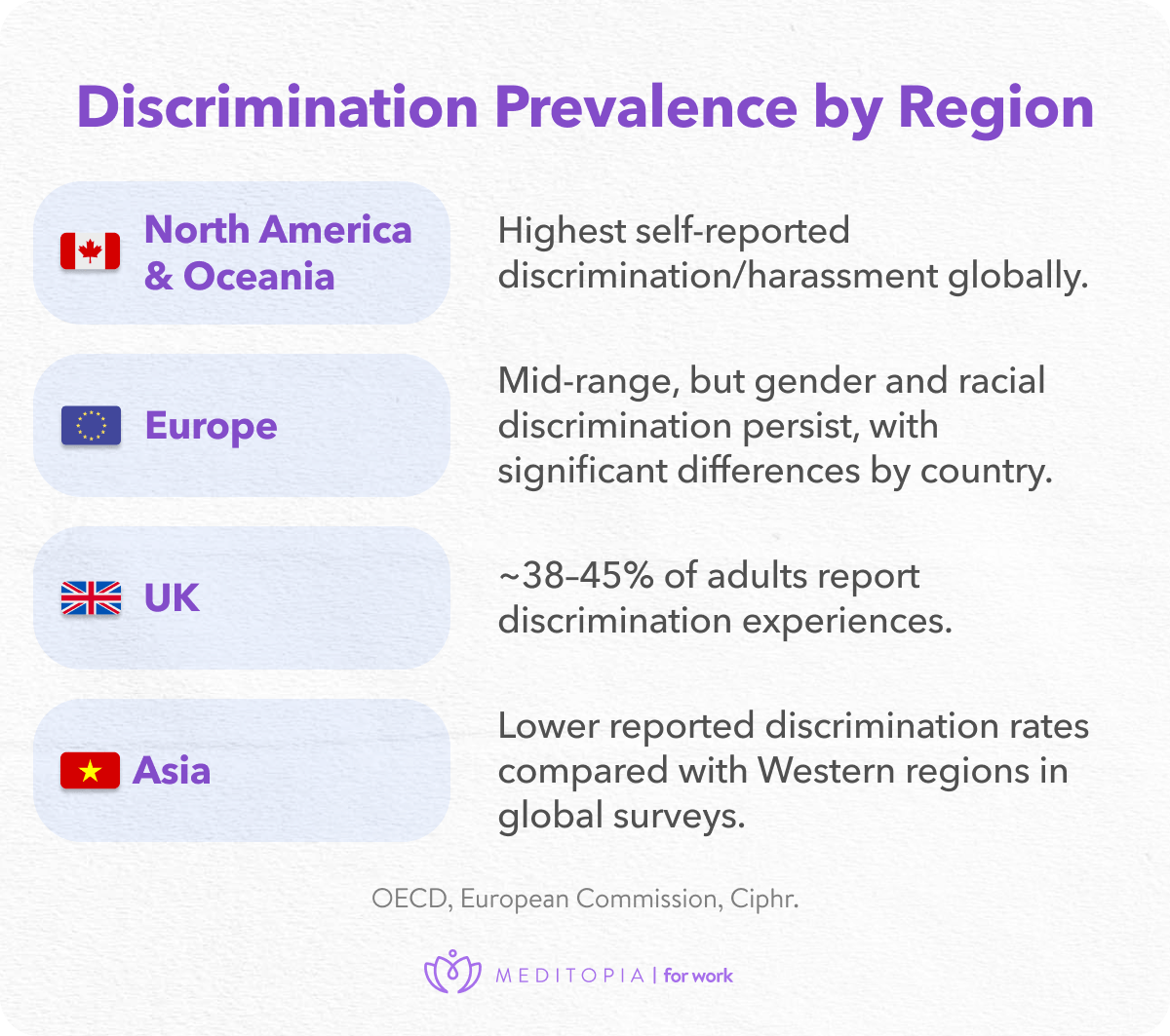
Regional insights reveal how discrimination manifests under different cultural, economic, and legal contexts. For HR professionals managing international teams, understanding these variations supports more targeted inclusion strategies.
UK Workplace Discrimination Statistics
In the UK, surveys repeatedly show that a large minority of workers report discriminatory treatment either on the job or during hiring, spanning age, race, gender, disability, and more.
- ~38% of UK adults have faced discrimination at work or when applying for a job [1].
- ~45% of UK workers report unfair treatment or job rejection due to bias [2].
- 39% of adults believe they were rejected from a role for discriminatory reasons [3].
- 7% of civil servants reported being discriminated against at work in the last 12 months, with 8% reporting bullying or harassment [4].
- Workplace disputes involving disability discrimination have risen significantly, early conciliation notifications relating to disability discrimination claims increased by 31% year-on-year.
- Almost 3 in 10 HR decision-makers (28%) agree it’s harder for women to progress in their organisation than men [5].
- Moreover, 53% of young women say they have experienced discrimination at work, with higher rates (61%) among racially minoritised young women.
- Younger workers are also more likely to face and recognise discrimination in employment contexts, with 65% of workers aged 18–34 reporting unfair treatment during recruitment or at work [6].
Europe Workplace Discrimination Statistics
Europe has robust anti-discrimination laws, yet inequitable treatment persists across gender, ethnicity, and age, particularly in recruitment and pay.
- Around 21% of Europeans aged 18–64 reported experiencing discrimination in their daily lives, including employment contexts.
- This figure is up from ~15% in 2019, indicating rising reported discrimination experiences [7].
- About 1 in 4 Europeans (≈25%) say they have personally experienced discrimination in the past year, with the highest rates among racialised minorities, persons with disabilities, LGBTI people and religious minorities.
- Recent fundamental rights reporting indicates persistently high levels of racial discrimination, harassment and unequal treatment across several member states [8].
- LGBTQ+ employees in the EU continue to face workplace bias, analysis indicates notable shares of gay, lesbian and bisexual workers have experienced discrimination compared with heterosexual employees.
- Around 16% of Europeans believe that religion or belief places them at a disadvantage in employment, indicating ongoing bias in hiring or workplace treatment. [10].
- The EU disability employment gap was ~39.2% points in 2023, showing substantial inequity in labour market participation and opportunities for people with disabilities [11].
- EU data show women still earn substantially less than men on average (e.g., a 12.7% gender pay gap in 2022), which reflects structural discrimination influencing workplace pay and advancement [12].
Canada & United States Workplace Discrimination
North America consistently reports among the highest discrimination rates worldwide, reflecting both increased awareness and systemic inequality.
- 61% of U.S. workers report witnessing or experiencing discrimination based on age, race, gender, or sexual orientation [13].
- Northern America & Oceania record the highest self-reported discrimination levels globally [14].
- Nearly half of U.S. racialized workers report unfair treatment at work [15].
- 42% of U.S. women say they have faced discrimination due to gender in professional settings [16].
- About 20% of U.S. workers with disabilities report feeling excluded or under-supported at work [17].
- Canada-specific statistics remain limited, but surveys indicate similar levels of perceived workplace discrimination among Indigenous and immigrant populations.
Asia & Australia Workplace Discrimination
In Asia and Oceania, limited transparency and under-reporting challenge the full extent of workplace discrimination, though broader violence and harassment data reveal patterns organizations must know.
- Oceania (Australia & New Zealand) reports one of the world’s highest rates of discrimination and harassment at 47.9% [18].
- Northern America & Oceania combined show the highest self-reported discrimination levels globally [19].
- Asia-specific data on workplace discrimination remains fragmented; however, international labour reports highlight widespread gender bias and barriers to promotion in Japan and South Korea.
- Australia’s Workplace Gender Equality Agency reports women earn 21.7% less than men on average, a gap influenced by systemic workplace inequality [20].
Workplace Discrimination by Category
Workplace discrimination takes many forms, often overlapping and compounding over time. Below are the most common types identified globally.
- Race and Ethnicity Discrimination
- Unfair or unequal treatment of individuals based on race, skin color, national origin, or cultural background, often reflected in hiring, promotions, and workplace interactions.
- About 30–35% of employees from minority racial or ethnic backgrounds report experiencing discrimination at work.
- Bias against individuals because of their age, including stereotypes that older workers are less adaptable or that younger workers are inexperienced or uncommitted.
- 57% of employees aged 18–34 have experienced workplace discrimination linked to age, particularly in hiring and promotions.
- Unequal treatment or lack of reasonable accommodations for individuals with physical, mental, or sensory disabilities, limiting their full participation in the workplace.
- round 1 in 5 workers with disabilities face barriers or bias at work.
- Unequal treatment or expectations based on gender identity or expression, including pay gaps, promotion bias, and unequal leadership opportunities.
- Women worldwide earn on average 17% less than men, highlighting persistent gender inequality in workplaces [21].
- Negative treatment, exclusion, or harassment of employees based on sexual orientation or gender identity, leading to psychological distress and reduced career progression.
- 47% of LGBTQ+ employees report discrimination or harassment at work [22].
- Bias or unfair treatment of employees because of their faith, beliefs, or religious practices, including restrictions on dress, prayer, or holidays.
- 15–20% of employees globally report unfair treatment at work due to religion.
- Unequal treatment or prejudice against employees based on nationality, citizenship status, or cultural origin, often impacting migrant or foreign-born workers.
- Across Europe, 1 in 4 immigrants report experiencing discrimination related to nationality or migration status in employment [23].
- Discrimination arising from overlapping identities, such as gender, ethnicity, and disability, that combine to amplify inequality and exclusion.
- Employees with two or more marginalized identities are 2–3 times more likely to report workplace discrimination than those with only one protected characteristic.
Causes of Workplace Discrimination (Statistics)
Workplace discrimination emerges from structural and cultural biases that persist in organisational systems. Identifying these root causes is essential to developing effective prevention strategies.
- Unconscious bias in recruitment: Experimental studies reveal persistent name- and race-based bias in callback rates.
- Lack of inclusive leadership: Organisations without accountable DEI leadership report higher discrimination rates.
- Cultural stereotypes: Persistent stereotypes lead to skewed evaluations and promotion barriers.
- Inaccessible workplaces: Lack of accommodations reinforces disability discrimination in the workplace.
- Poor psychological safety: Fear of retaliation prevents many employees from bias reporting, leaving inequities unresolved.
- Systemic inequality: Historic inequities and under-representation perpetuate discriminatory norms.
- Intersectionality: Multiple identity factors (gender, ethnicity, sexual orientation) intensify risk of discriminatory treatment.
If you're intersted in training your managers or team regarding DEI policies, improving work culture, reducing stress and conflicts, contact Meditopia to discuss our expert-led webinars, self-guided programs, 1-1 expert sessions, and more.
Impact of Workplace Discrimination
Discrimination harms both employees and organisations, driving mental health challenges, disengagement, and turnover. Its ripple effects extend to culture, reputation, and profitability.
- Discrimination-related stress: Over half of affected employees experience long-term psychological strain.
- Employee engagement: Discriminated workers show lower satisfaction and commitment.
- Absenteeism: Psychological stress leads to higher absenteeism among targeted employees.
- Turnover: Workers experiencing bias are more likely to quit voluntarily.
- Wellbeing disparities: Affected groups report poorer physical and mental health outcomes.
- Productivity loss: Discrimination undermines collaboration and innovation.
- Reporting gap: Nearly 40% of discrimination cases remain unreported due to retaliation fears.
How EAPs & Employee Wellness Programs Address Workplace Discrimination
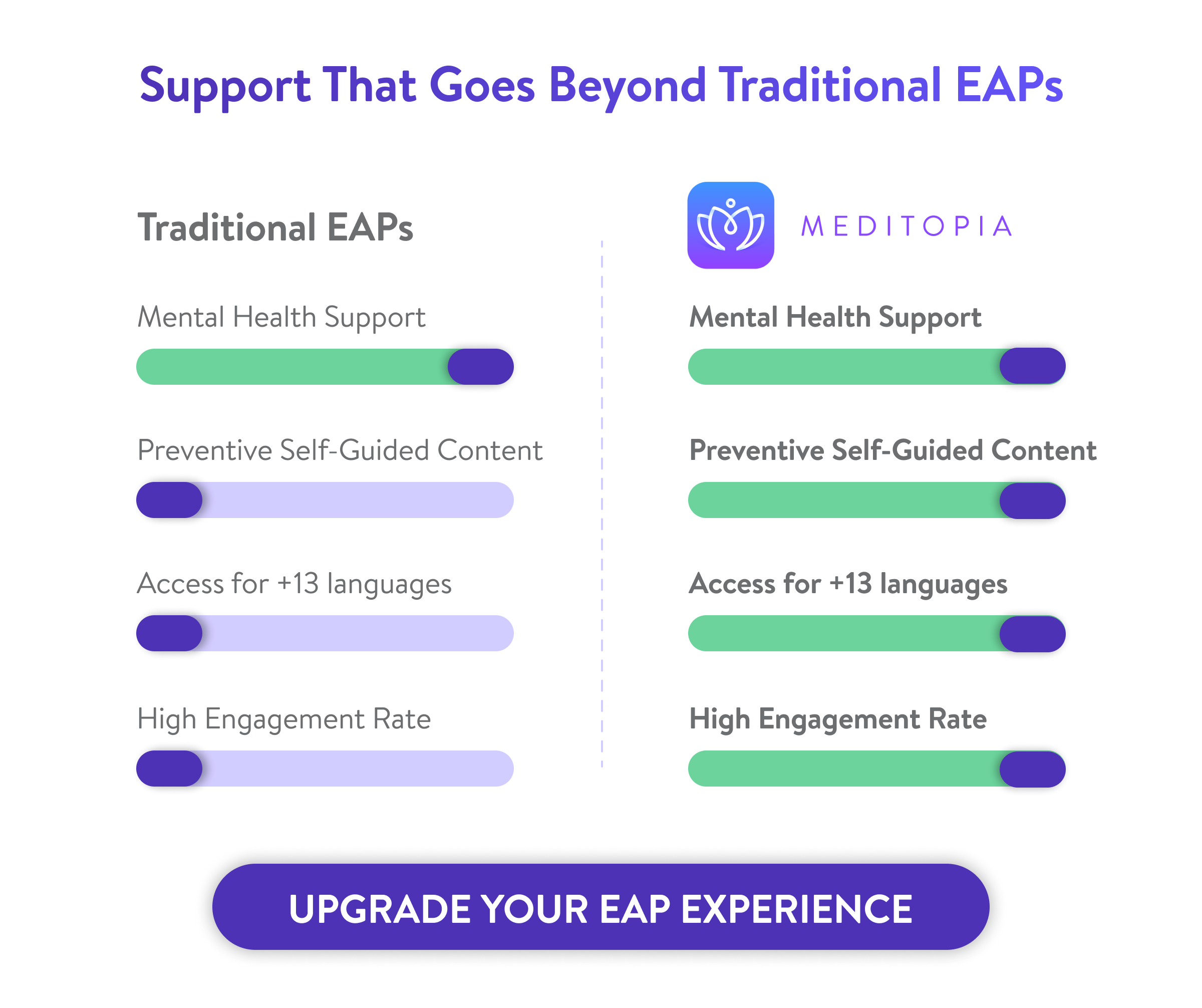
Inclusive wellness programs like Meditopia for Work can mitigate the mental health impact of discrimination while helping organisations foster equity and trust.