


In 2026, leadership burnout is no longer a silent issue. It is measurable, preventable, and deeply connected to culture, engagement, and retention. Here’s what HR and leadership teams need to know.

What Is Leadership Burnout?
Burnout is defined by the World Health Organization as a syndrome resulting from chronic workplace stress that has not been successfully managed [1]. It is characterized by:
- Energy depletion or exhaustion
- Increased mental distance or cynicism
- Reduced professional efficacy
However, burnout in leadership roles differs from general employee burnout. Leaders experience:
- Sustained decision fatigue
- Higher levels of emotional labour
- Constant visibility pressure
- Accountability without full control
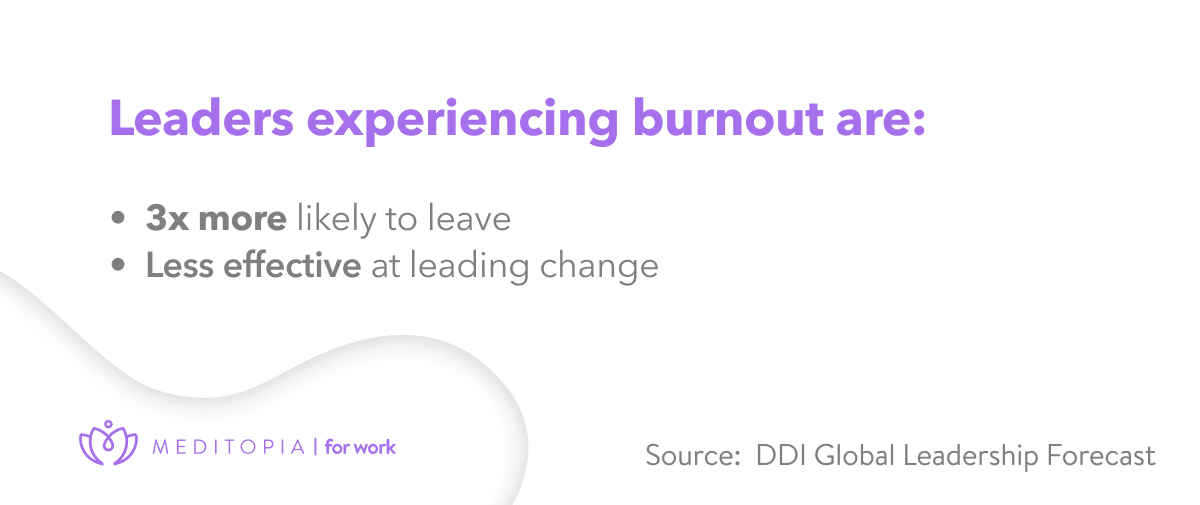
Unlike individual contributors, leaders often ignore early symptoms because they fear reputational damage or believe they must model resilience. This makes burnout in leadership positions harder to detect and more likely to escalate into full leader exhaustion.
How Common Is Manager Burnout? Leadership Burnout Statistics
Interestingly, the data shows that manager burnout is consistently higher than employee burnout.
- Gallup has repeatedly found that managers are more likely to report feeling burned out “very often” or “always" [2].
- Similarly, the Microsoft Work Trend Index reported that 53% of managers experienced burnout symptoms, compared to 48% of employees, highlighting the disproportionate impact on leadership roles [3].
- Also, the Psychological Association’s Work in America Survey further shows sustained high stress levels among leaders, particularly during periods of organizational change [4].
Signs of Leadership Burnout (What to Watch For Early)
Leadership burnout often begins with overcommitment and managerial overload before shifting into disengagement.
Emotional & Cognitive Signs
- Irritability or cynicism
- Reduced empathy
- Mental fatigue
- Decision fatigue
- Loss of strategic focus
Behavioural & Performance Signs
- Micromanagement or withdrawal
- Slower decision-making
- Engagement decline in leadership forums
- Increased conflict
Physical & Mental Health Signs
- Sleep disruption
- Chronic fatigue
- Anxiety symptoms
- Emotional numbness
Why Manager Burnout Is Rising
Manager burnout is not anecdotal. Structural shifts in how work operates are increasing sustained leadership stress:
1. Sandwich Pressure (Managing Up and Down)
- Middle managers are uniquely positioned between executive demands and team needs.
- Research from Harvard Business Review highlights that middle managers experience heightened role conflict and ambiguity due to competing expectations from both directions [5].
- This “sandwich pressure” significantly increases emotional labour and cognitive strain.
2. Rising Work Complexity & Change Fatigue
- Organizational transformation has accelerated.
- The Microsoft Work Trend Index reports that leaders are navigating continuous change, digital acceleration, and AI adoption while managing hybrid teams.
- Constant transformation increases change fatigue, a well-documented driver of burnout in leadership roles.
3. Expanding Spans of Control
- Gallup research indicates that managers today are responsible for more direct reports than in previous years, increasing managerial overload [6].
- Larger spans of control reduce leaders’ ability to recover and increase sustained stress exposure.
4. Higher Emotional Demands Post-Pandemic
- The American Psychological Association’s Work in America Survey reports that leaders face persistent stress levels tied to workforce wellbeing, mental health conversations, and retention pressures.
- Leaders are now expected to actively maintain psychological safety while managing their own stress, increasing emotional labour demands.
5. Accountability Without Increased Control
- Research on job strain theory (Karasek’s demand-control model), widely cited in occupational health psychology, demonstrates that high demands combined with low control predict burnout risk [7].
- Many managers today report high performance accountability but limited autonomy over budgets, headcount, or strategic direction, a classic high-demand/low-control scenario associated with burnout risk.
The Ripple Effects of Leadership Burnout on Teams & Culture
When leader burnout takes hold, it reshapes team dynamics, decision quality, and cultural norms, often in subtle but measurable ways.
Research from Gallup shows that managers account for up to 70% of the variance in team engagement [8]. This means that burnout in leadership roles directly influences team morale, discretionary effort, and retention risk. This is what teams usually experience:
- Lower psychological safety
- Slower decision-making
- Increased turnover risk
- Engagement decline
- Reduced trust in direction
Since leadership burnout statistics consistently show that managers report higher stress levels than individual contributors, that imbalance creates a multiplier effect: stressed leaders often unintentionally transmit stress to teams. So, when middle management burnout becomes widespread, organizations see ripple effects in:
- Higher absenteeism
- Increased internal conflict
- Reduced innovation
- Lower team morale
How to Avoid Leadership Burnout (Prevention Strategies)
Understanding how to avoid leadership burnout requires separating individual responsibility from organizational design. Sustainable prevention is both personal and systemic.
Individual-Level Prevention
Leaders can reduce burnout risk by:
- Recognizing early signs of leadership burnout
- Delegating to reduce cognitive overload
- Setting clear recovery boundaries
- Participating in peer leadership circles
However, placing the burden solely on the individual increases stigma. Sustainable prevention requires structural change.
Organisational-Level Prevention
Organizations should focus on:
- Reasonable spans of control
- Clear decision rights
- Transparent expectations
- Workload audits to reduce managerial overload
- Leadership-specific wellbeing KPIs
How to Recover From Leadership Burnout (When It’s Already Happening)
Chances are you are reading this because you may be experiencing early symptoms. And that is great, because when burnout in leadership has already developed, recovery depends on early recognition and structured support.
Early Stage Recovery
- Temporary redistribution of responsibilities
- Coaching or psychological support
- Reduced decision load
Advanced Recovery
- Formal leave
- Role redesign
- Structured reintegration planning
One barrier to recovery is silence. Many leaders struggle with how to talk to manager about burnout, especially when the manager is part of the executive team. Similarly, employees often hesitate about how to talk to your manager about burnout, fearing reputational damage.
Creating psychologically safe escalation pathways is therefore essential. Recovery accelerates when burnout conversations are normalized rather than pathologized.
How HR Can Support Leaders Facing Burnout
HR plays a pivotal role in identifying and mitigating management burnout before it cascades into team-wide issues. Proactive HR interventions include:
- Leadership pulse surveys to track stress indicators
- Confidential mental health support access
- Leadership peer forums
- Targeted support for at-risk groups experiencing middle manager burnout
Structured escalation pathways also clarify how leaders can seek help without stigma. Providing scripts, training, and safe channels supports conversations about burnout at all levels.
How Meditopia for Work Helps Prevent & Address Leadership Burnout
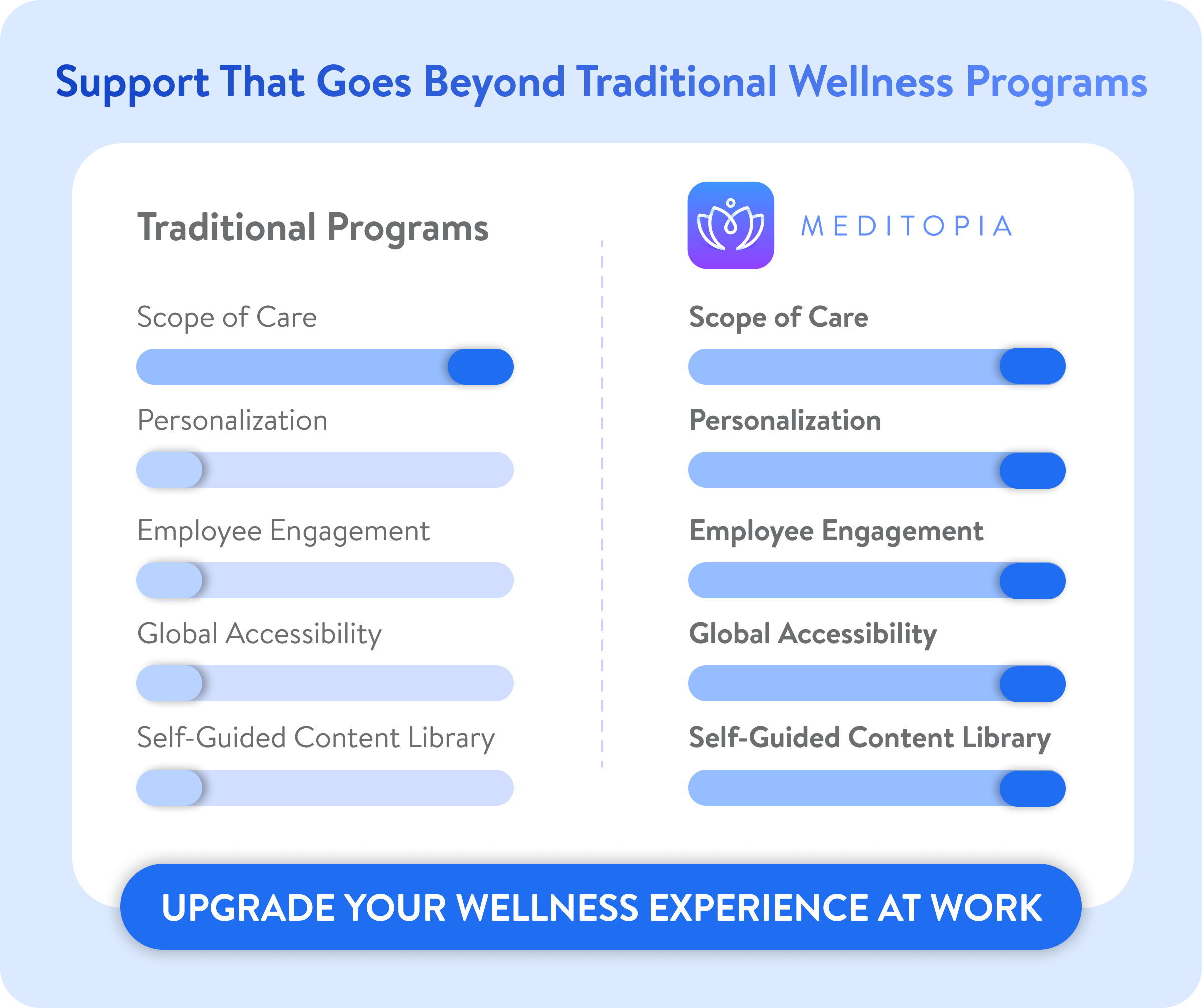
Addressing burnout leadership risk requires confidential, structured, and time-efficient support. Meditopia for Work supports leaders and employees through:
- Online trainings on stress regulation and energy management
- 1:1 expert sessions for leadership-specific challenges
- Self-guided support in 14 languages, designed for time-constrained executives
- AI companionship trained by mental health experts, to manage stress and receive guidance anytime