%2008.07.36_4ffe9739.jpg)




As organizations continue adopting hybrid and global work models, tech workers face an emotional and operational complexity unlike any other sector. That’s where an employee assistance (EAP) framework becomes essential, lets discover how these programs can improvoce tech worker's lives, and reduce absenteeism, anxiety, and more.

Why EAPs Matter in the Tech Industry
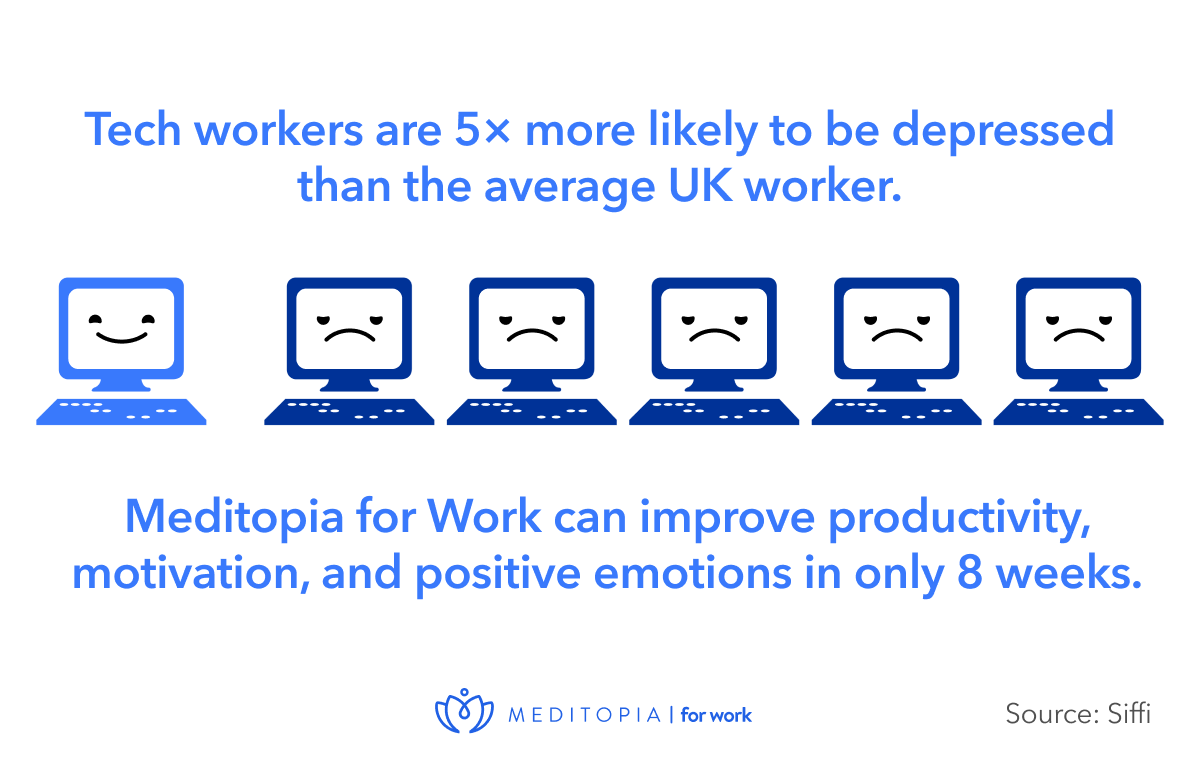
Tech professionals operate in environments defined by constant deadlines, distributed teams, long screen hours, and high-stakes problem-solving. Research consistently highlights how cognitive overload, unclear boundaries, and digital fatigue affect employee wellbeing:
- 77% of professionals experience burnout, with tech and IT roles showing heightened risk due to cognitive overload [1].
- Burned-out employees are 63% more likely to take sick days and show reduced confidence in performance [2].
- Tech leaders experience high decision fatigue. McKinsey highlights that senior leaders, especially in digitally intensive roles, face exhaustion due to “always-on” decision cycles and remote team oversight [3].
- More than 50% of Millennial and Gen Z employees have left roles for mental-health reasons [4].
- 57% of IT professionals report working more hours than contracted, increasing burnout risk [5].
- In Silicon Valley, nearly 60% of tech workers report experiencing symptoms of anxiety [6].
- 23% of tech employees report feeling lonely or isolated when working remotely [7].

EAP Use Cases in Tech Companies
Tech teams move fast, collaborate across time zones, and operate under constant delivery pressure. This is where an employee assistance program becomes practical, not theoretical: it gives engineers, product teams, and people managers support in the exact moments they need it most.
Key Benefits of EAPs for Tech Companies
In this section, you'll see how an employee assistance program delivers measurable impact for tech organizations.
- Reduced absenteeism and turnover:
- EAPs give tech employees timely mental health support, helping prevent stress-related sick leave and reducing turnover in highly competitive engineering and product roles.
- Improved morale and resilience:
- With access to confidential employee assistance, counselling, and resilience-building resources, teams handle pressure and tight release cycles with greater emotional stability.
- Enhanced employee engagement:
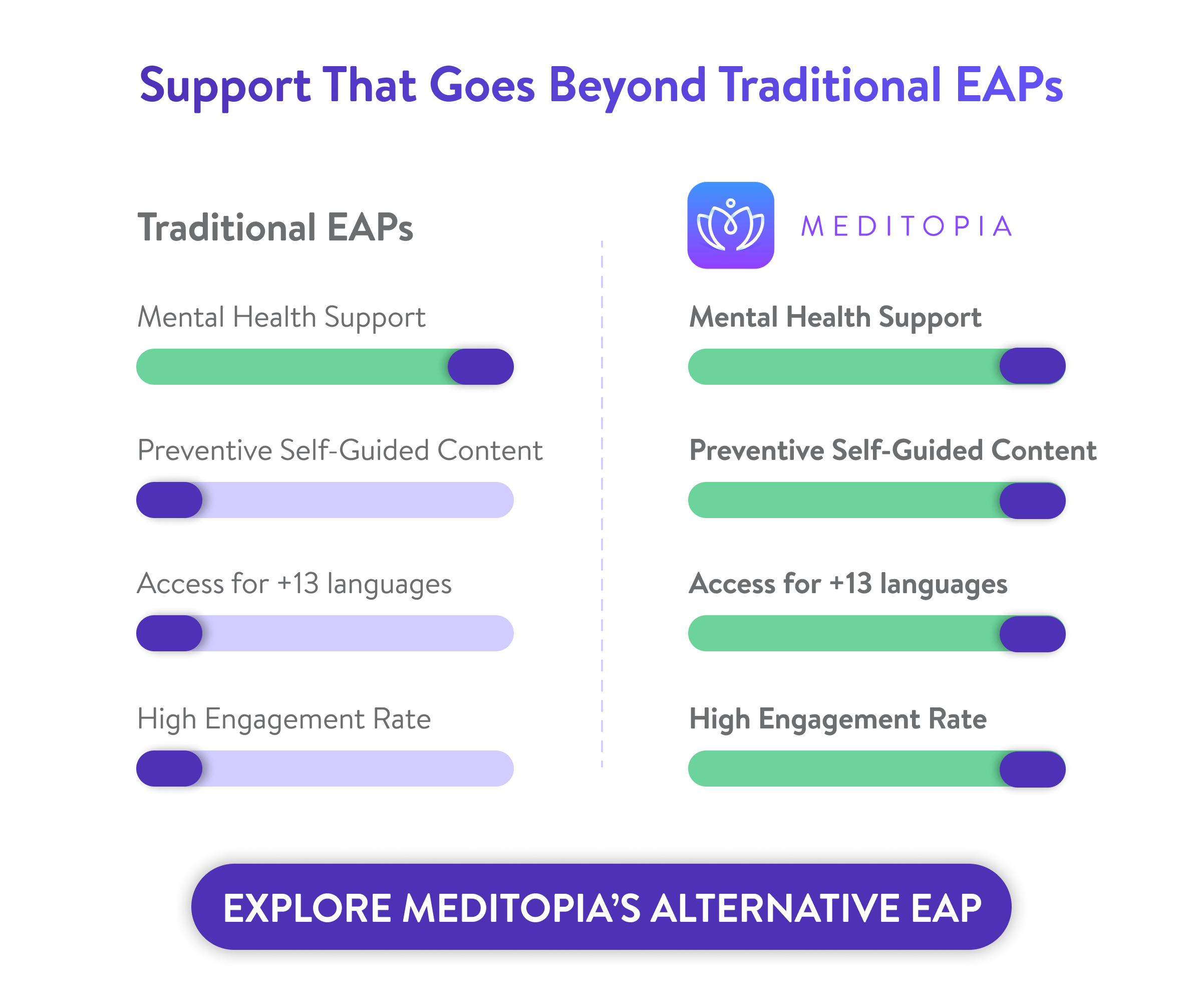
- A digital EAP like Meditopia for Work offers on-demand tools (expert sessions, self-guided programs, access to personal trainers, and coping skills) which increases overall engagement and supports healthier work habits.
- Support for compliance with workplace wellbeing expectations:
- As expectations rise around psychological safety and workplace wellbeing, EAPs help tech companies align with global standards and HR best practices for employee care.
- Stronger employer branding in a competitive talent market:
- Offering a comprehensive EAP signals that the company invests in people, improving reputation among candidates and helping retain top technical talent.
You cn learn more about average EAP utilization rates in our specialized blog.
How to Implement an EAP in a Tech Organization
As any other strategic implementation, you need tounderstand the problem, choose the right solution, ship with clear communication, and iterate based on usage data. Below is a practical, step-by-step framework HR, People & Culture, and leadership teams can follow.
As always, Meditopia can take care of all these steps for you:
- 1. Assess wellbeing needs in your tech workforce
- Run anonymous pulse surveys focused on stress, workload, hybrid work challenges, and access to mental health support.
- Analyse existing data: absenteeism, turnover in key roles, exit interviews, and engagement survey comments.
- Map “high-risk” groups (e.g. on-call teams, SRE, support, early-stage managers, customer-facing tech roles).
- 2. Define clear objectives for your EAP
- Decide what success looks like: e.g. reducing burnout risk, improving time-to-support for employees, lowering stress-related absence, or boosting engagement scores.
- Align with leadership so the EAP is seen as a strategic lever, not just a side benefit.
- 3. Choose the right EAP provider
- Compare classic phone-based programs with digital EAP solutions like Meditopia for Work that offer multilingual content, 1:1 expert sessions, and self-guided tools suitable for distributed teams.
- Check for strong data protection, confidential access, and easy integrations (Slack, MS Teams, SSO, HRIS).
- Ensure the provider can serve hybrid and remote tech workers across time zones.
- 4. Design a simple, frictionless access experience
- Make sure employees can reach the platform in 2–3 clicks from the tools they already use.
- Offer multiple entry points: self-referral for employees, guidance for managers, and resources for HR (e.g. manager playbooks for difficult conversations). Meditopia can craft these materials for you.
- 5. Communicate the program internally to boost awareness and trust
- Launch with a clear message from leadership that emphasises confidentiality, zero negative consequences, and that using EAP tech is encouraged self-care.
- Tailor messages to different audiences: engineers, product teams, managers, and leaders.
- 6. Track engagement and outcomes using analytics
- Work with your provider to get anonymised usage data: number of users, topics (e.g. stress, anxiety, work–life balance), repeat usage, and satisfaction.
- Combine this with your existing HR metrics to understand how the program is influencing key outcomes.
- 7. Continuously refine based on feedback and data
- Collect qualitative feedback from employees and managers.
- Adjust your communication, add targeted campaigns for high-pressure teams.
- Iterate on features, communication, and positioning as your organisation, teams, and tech stack evolve.
Why EAPs Matter for Tech: Comparison With Other Industries
Every industry faces wellbeing challenges, but the type of stressors and the kind of support employees need can look very different. Below is a cross-industry snapshot: