




As workforce expectations evolve, employee burnout continues to be one of the biggest threats to organizational health. For HR leaders and decision-makers, understanding the latest burnout statistics offers clarity on where workplace wellbeing stands today, and what can be done to protect employees from chronic stress, disengagement, and performance decline. Let's explore more.

Global Employee Burnout Statistics at a Glance
Burnout has evolved from an HR talking point into a measurable business risk. Recent global research shows that sustained chronic workplace stress now affects nearly half of the world’s employees, directly influencing engagement, turnover, and financial outcomes.
The data below compiles the latest worldwide employee burnout statistics:
Workplace Wellbeing Statistics by Region
Burnout isn’t distributed evenly across the globe. Economic pressures, cultural expectations, and work-structure differences shape how employees experience and report chronic workplace stress.
Understanding these regional burnout statistics helps HR teams localize wellbeing strategies, let's check some data:
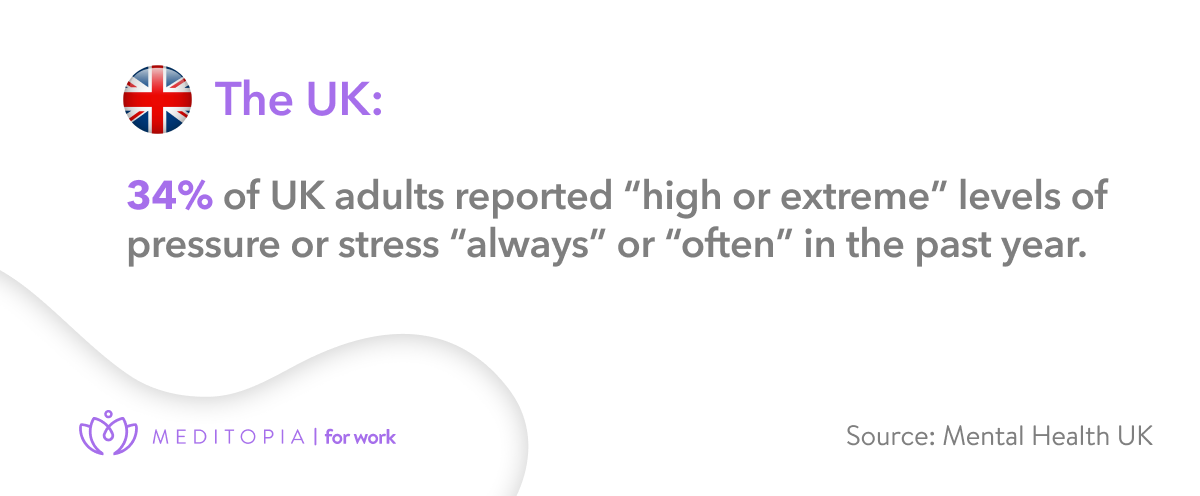
United Kingdom
- 91% of UK workers reported high or extreme levels of stress over the past year, and more than half of all sick days were linked to stress, anxiety, or burnout [1].
- Stress-related absence now accounts for over 50% of all lost workdays, underscoring the financial and operational toll of unaddressed mental health issues [2].
- Younger workers face the steepest rise in exhaustion: 83% of Gen Z frontline employees in the UK report burnout symptoms compared to 66% of older cohorts [3].
Europe
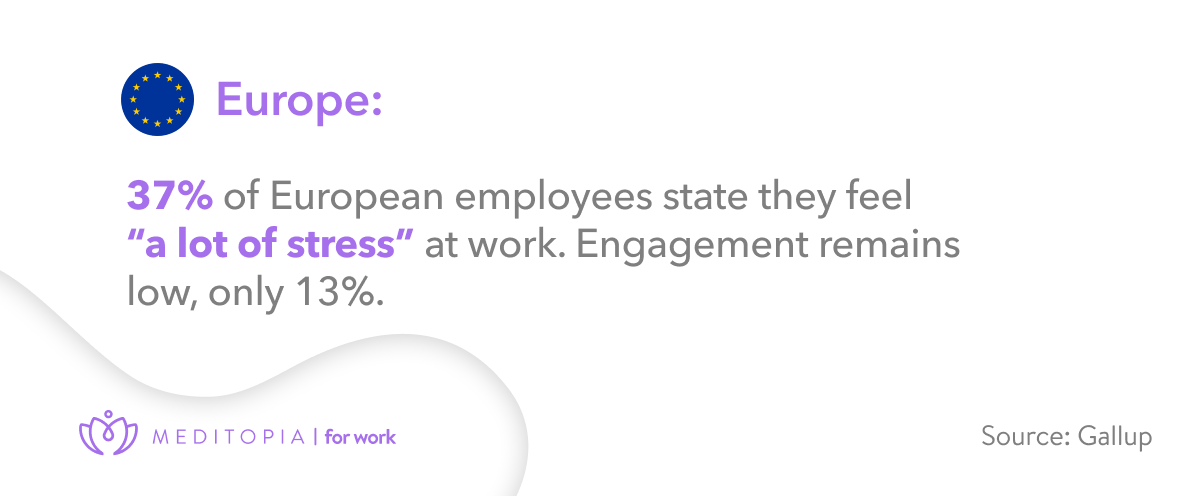
- Across EU member states, 29% of employees report stress, depression, or anxiety caused or worsened by work, making mental strain one of the top three work-related health problems in Europe [4].
- Roughly 10% of European employees meet clinical criteria for burnout, varying significantly by country and occupation [5].
- In France, six in ten employees report being exposed to high psychosocial risk factors such as workload and lack of recognition, whereas Nordic countries report lower rates, reflecting cultural contrasts in job design and worker autonomy [6].
United States & Canada
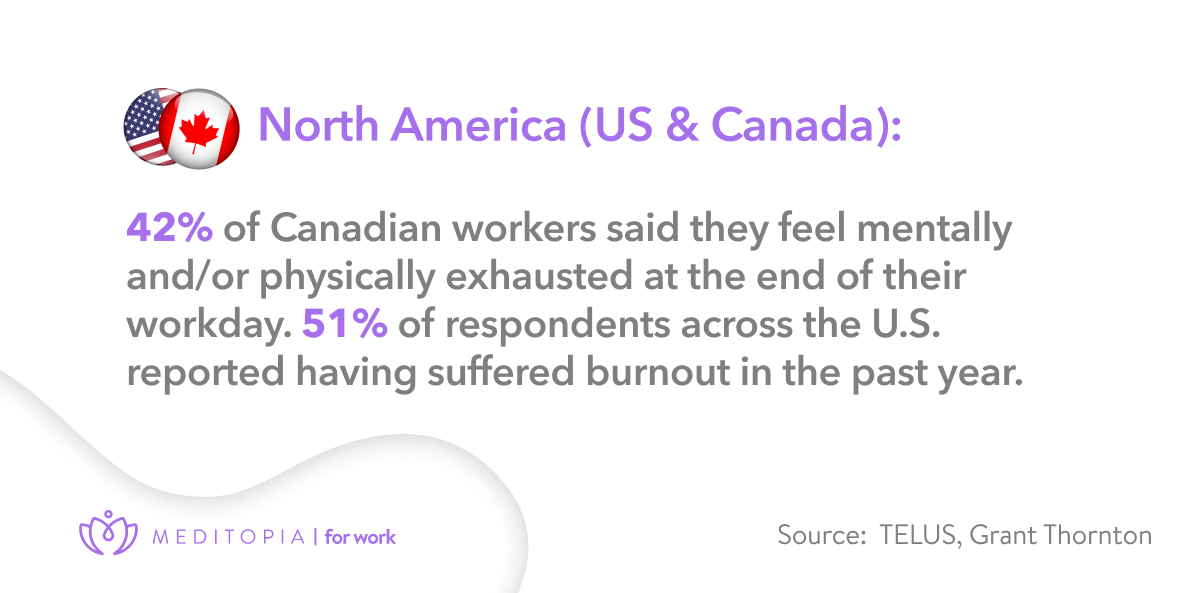
- Surveys show over 70% of North American employees experience moderate to high workplace stress, making it one of the most affected regions globally [7].
- The same research confirms that nearly half of burned-out U.S. workers are actively seeking new jobs, demonstrating a strong link between burnout and turnover risk.
- Only 21% of employees in the U.S. and Canada believe their employer genuinely cares about their mental health, exposing a major gap between wellbeing rhetoric and employee perception [8].
Asia & Oceania
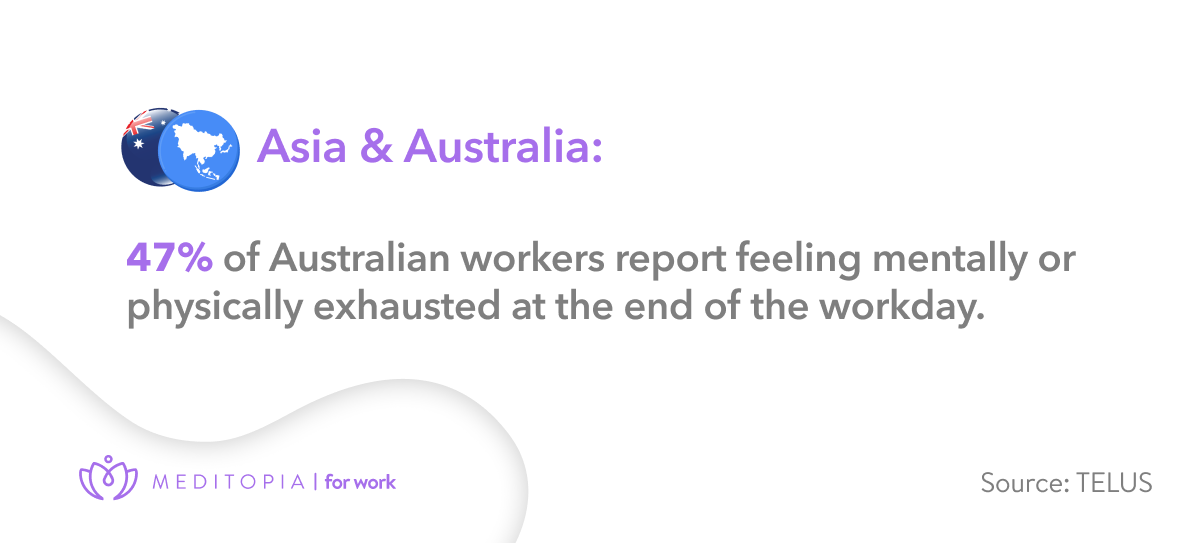
- A 2024 regional assessment found a burnout prevalence of 62.9% among full-time workers across Malaysia, Singapore, Indonesia, and the Philippines, with the Philippines highest at 70.7% [9].
- McKinsey research indicates Asian employees report higher burnout than the global average, largely due to long working hours, presenteeism, and hierarchical workplace cultures [10].
- In Japan, around 31% of employees experience measurable burnout symptoms, showing regional variation even within East Asia.
- National health and HR studies show burnout levels at or slightly above global averages, especially among frontline and healthcare workers [11].
- Australia ranks among the most overworked OECD countries, with long working hours and limited rest contributing to persistent stress and disengagement [12].
Burnout Statistics by Role, Industry & Demographics
Effective workforce strategy requires understanding where burnout is concentrated and why it differs by role, industry, and worker characteristics.
Some roles and sectors inherently face greater emotional, cognitive, or workload demands; others report divergent patterns based on job autonomy, support structures, or job design. Below are key, insights into how burnout prevalence and risk factors vary.
Job Level & Work Role
- Healthcare roles consistently show some of the highest burnout prevalence among major professions.
- In samples of medical centers over multiple years, primary care physicians reported burnout rates ranging from about 46% to 58%, with overall healthcare worker burnout rising over time [13].
- This reflects both clinical workload and emotional fatigue associated with patient care.
- In a large multi-professional clinical sample, nurses (56.0%) and other clinical staff (54.1%) reported higher burnout rates than physicians (47.3%) or non-clinical staff (45.6%), indicating variation even within healthcare roles [14].
- Increases in job demands raise the probability of burnout across physicians, nurses, managers, and teachers, underscoring that job complexity and workload contribute systematically to exhaustion risk [15].
Industry Differences
- Business and professional services report burnout rates about 22% higher than sectors with relatively lower burnout (e.g., hospitality), highlighting differences in stress exposure by industry profile [16].
- Sector comparisons indicate that service-oriented sectors such as education, government/public administration, and healthcare score poorly on wellbeing dimensions, including emotional exhaustion and disengagement.
- Country-specific data (e.g., Spain) shows around 44–55% of workers across various sectors report experiencing burnout at some point, often tied to excessive workload and low recognition; certain industries like technology, hospitality, and staffing show elevated risk [17].
Demographic Patterns
- Global aggregates and employer surveys frequently find younger workers (Millennials/Gen Z) reporting higher burnout symptom prevalence than older cohorts, suggesting age-linked stressors such as career pressure and financial strain [18].
- Broader workforce analyses show that overall wellbeing and thriving scores have declined, with older managers and female managers recording some of the largest drops in positive wellbeing indicators, hinting at intersectional dynamics across age and leadership roles [19].
- Other demographic research highlights how social support networks, co-worker support, and managerial backing can moderate burnout odds, with evidence that stronger support is linked to lower burnout probability across various groups (e.g., nurses, teachers).
Statistics on Burnout Risk Factors
Behind every case of employee burnout lie identifiable, measurable conditions. Research consistently points to a combination of organizational, interpersonal, and structural factors that increase the likelihood of exhaustion, disengagement, and turnover.
- High workload intensity and constant time pressure are the strongest predictors of emotional exhaustion and reduced job satisfaction.
- Unclear expectations or shifting priorities create cognitive overload and sustained stress.
- Low managerial support and lack of recognition accelerate burnout by undermining motivation and psychological safety.
- Insufficient role autonomy, when employees have little control over decisions or workflow, correlates with higher stress and lower engagement.
- Toxic team dynamics, including poor communication or interpersonal conflict, increase perceived workload and emotional fatigue.
- Digital overload (constant notifications, excessive meetings, lack of focus time) is emerging as a modern burnout driver across hybrid workplaces.
- Lack of career development and skill stagnation are linked to long-term disengagement and feelings of futility.
- Job insecurity or fear of redundancy compounds burnout risk, especially in restructuring environments.
- Inadequate recovery time, limited rest, blurred work-life boundaries, and insufficient vacation use, prevents physiological and mental recovery.
- Value misalignment between employees and the organization erodes intrinsic motivation and belonging.
The Impact of Burnout: Productivity, Engagement & Turnover
Burnout doesn’t only affect wellbeing, it erodes the very foundations of organizational performance. Chronic workplace stress translates directly into productivity loss, engagement decline, and financial inefficiency, making it one of HR’s most critical management priorities.
- Employees experiencing burnout are 63% more likely to take a sick day and 23% more likely to visit the emergency room, driving higher absenteeism costs.
- Teams with high burnout show 18–20% lower productivity and markedly reduced discretionary effort.
- Employee engagement levels drop by up to one-third in teams with persistent stress exposure, undermining creativity and innovation.
- Presenteeism, working while mentally exhausted, reduces focus and decision-making quality, often going unnoticed in productivity metrics.
- Turnover intentions double among burned-out employees compared to engaged peers, inflating recruitment and training costs.
- High burnout correlates with weaker customer satisfaction scores in client-facing roles, reflecting downstream business impact.
- Leadership burnout cascades: exhausted managers transmit stress, disengagement, and conflict to their teams, compounding organizational fatigue.
- On average, burnout contributes to billions in lost economic output annually, according to global workforce analyses.
How Wellbeing Programs & EAPs Reduce Burnout
Evidence shows that comprehensive wellbeing strategies and Employee Assistance Programs significantly lower the prevalence and severity of burnout when they integrate preventive, psychological, and structural support. You can learn more about average EAP utilization rates in our specialized blog.
Here's more info about wellbeing programs:
- Companies offering structured wellbeing programs see 25–40% lower turnover rates, driven by stronger engagement and retention.
- Meditopia for Work is capable of reducing stress and increasing positive emotions in only 8 weeks, through personalized self-guided programs, 1-1 expert sessions, corporate wellebing challenges, access to 100+ gym facilities in your city, and more!
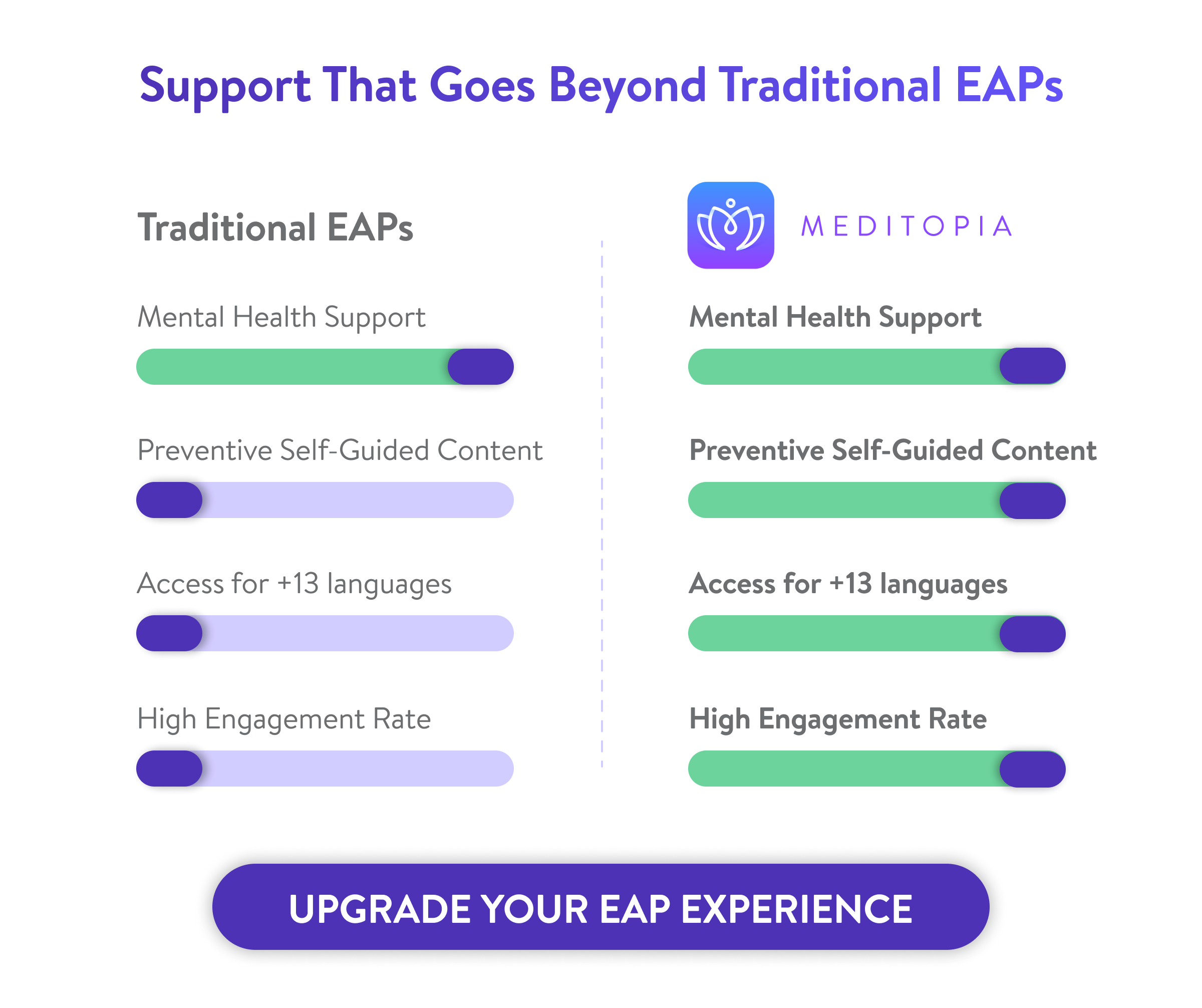
- Access to 1:1 mental health consultations (psychologists, coaches, dietitians, physical therapists) helps employees manage stress before it escalates into burnout.
- EAP utilization correlates with measurable drops in reported stress and absenteeism, improving productivity and morale.
- Leadership training in empathy, communication, and workload management directly reduces burnout across teams by fostering psychological safety.
- Flexible work arrangements consistently rank among the top protective factors against burnout.
- Digital wellbeing tools (e.g., mindfulness platforms like Meditopia, guided meditations, or AI wellbeing assistants) improve daily stress management and emotional regulation.
- Peer support and community programs within companies reduce isolation and build a culture of shared resilience.
- Organizations that regularly measure and report wellbeing metrics (stress index, engagement score, turnover trends) can proactively identify and address burnout risks.