



With rising awareness around mental health, increased legislative scrutiny, and evolving workforce expectations, organisations must proactively support their employees. One of the most effective ways to do this is by implementing a robust Employee Assistance Program (EAP), but which one suits you better? Let's discover the best EAPs in Australia, and Australian cities like Melbourne, Sydney, Brisbane, Adelaide, and Perth.

Top EAP Providers in Australia
To help you navigate your options, here’s a quick comparison of some of the best online eap in Australia and EAP providers cost:
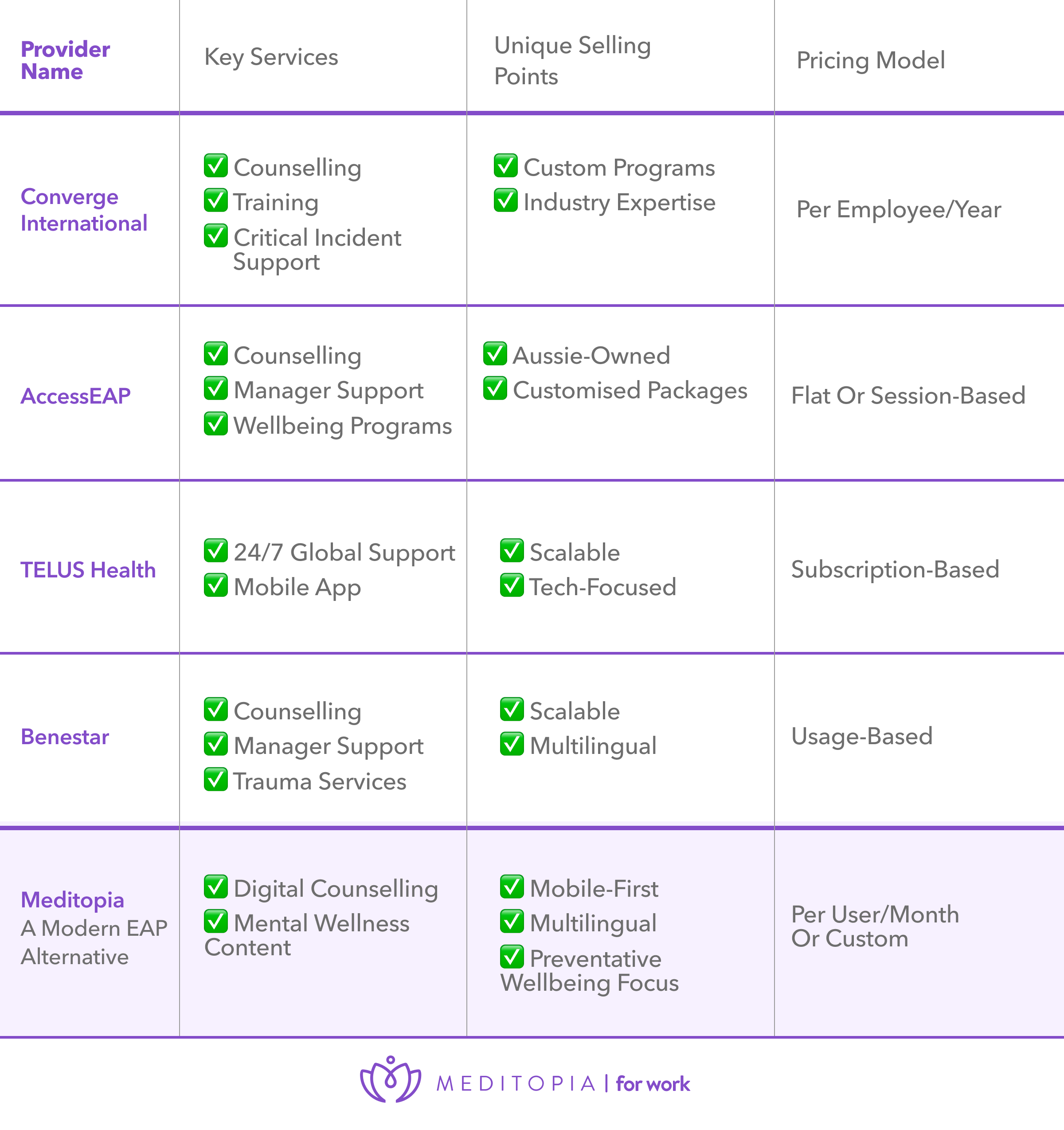
1. Converge International
A veteran among EAP companies, Converge International has been serving Australian workplaces for over 60 years.
Key Services:
- Confidential counselling (in-person, phone, video)
- Manager assist & critical incident support
- Tailored wellbeing training
Unique Selling Points:
- Deep experience across government, education, mining, and finance
- Culturally sensitive programs
Pricing Structure:
Per employee annual contracts or tailored quotes.
%2008.07.36_4ffe9739.jpg)
2. AccessEAP
One of the largest employee mental health services in Australia, AccessEAP offers comprehensive support with a strong local footprint.
Key Services:
- Short-term counselling
- Wellness check-ins
- Manager coaching
Unique Selling Points:
- 100% Australian-owned
- Strong customer service reputation
Pricing Structure:
Flat fee per employee or per-session model.
3. TELUS Health (LifeWorks)
Part of the international EAP providers category, TELUS Health is known for its digital-first approach and global scalability.
Key Services:
- 24/7 multilingual counselling
- Wellbeing mobile app
- Manager resources
Unique Selling Points:
- Seamless global coverage
- Robust digital platform
Pricing Structure:
Subscription pricing based on employee volume.
4. Benestar
A trusted name among eap vendors, Benestar delivers blended digital and human services for workplaces of all sizes.
Key Services:
- Counselling (online, onsite)
- Manager training
- Trauma and crisis services
Unique Selling Points:
- National coverage
- Flexible plans for SMEs and enterprises
Pricing Structure:
Usage-based billing with custom tiers.
5. Meditopia for Work
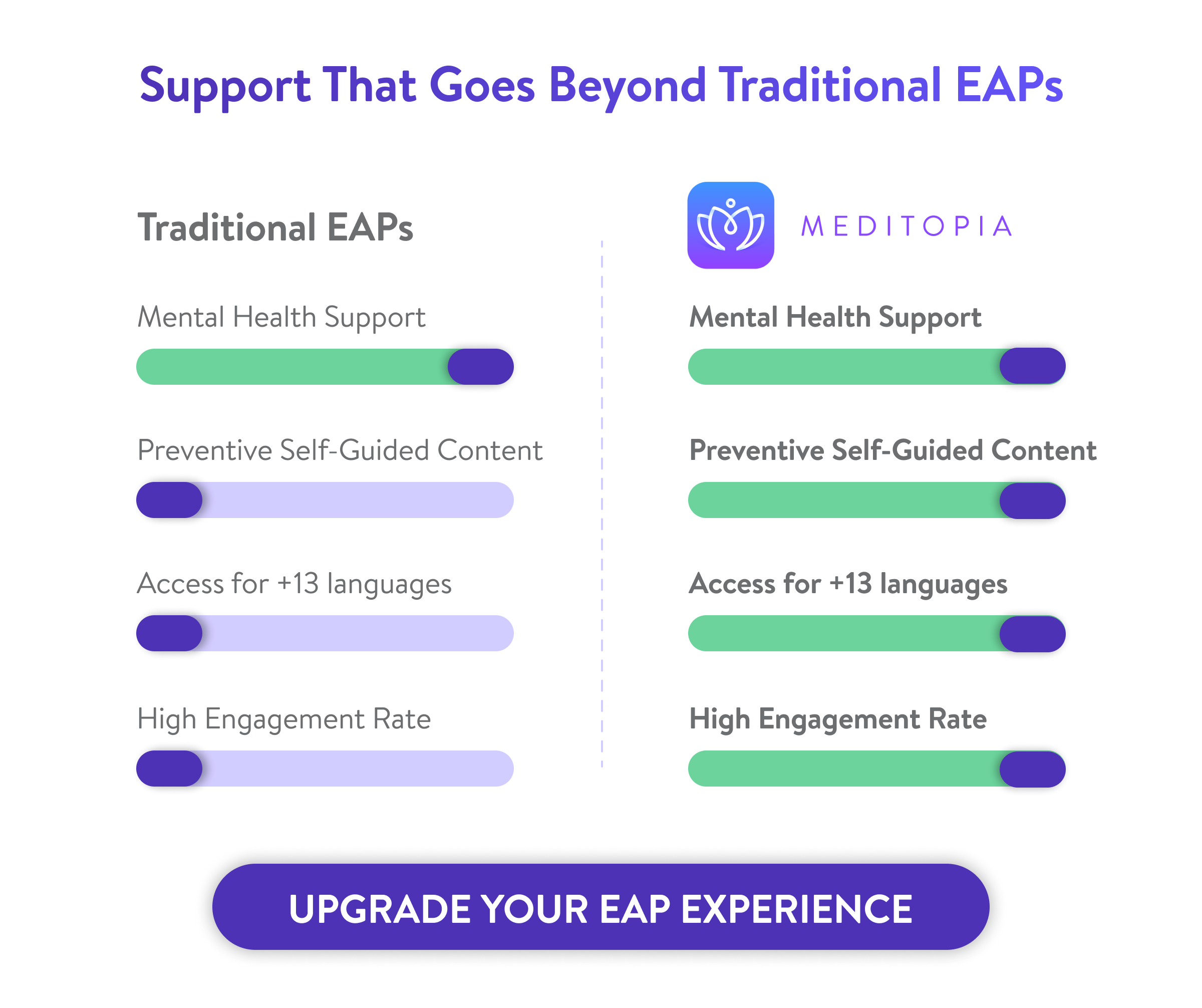
Meditopia has entered the EAP vendors market with a strong digital-first offering designed for the modern workforce. While originally known for meditation and mindfulness, its expanded suite now supports emotional wellbeing at work.
Key Services:
- Mental health content library
- Online therapy sessions
- Analytics for HR teams
- Custom wellness programs
Unique Selling Points:
- Deep localisation with services in over 13 languages
- Focus on proactive, preventative wellbeing and access to gym facilities
- High user engagement through mobile-first delivery
- AI mental health companionship
- Personalized workshops and webinars
Pricing Structure:
Typically offered via per-user, per-month licensing; custom enterprise plans available. It's one of the most affordable EAP cost per employee.
6. Newport & Wildman
Part of the Access EAP group, Newport & Wildman is a locally rooted provider serving Tasmanian workplaces with a strong community focus. With over 30 years of experience, they are known for tailoring EAP solutions to regional needs while maintaining access to national resources.
Key Services
- Counselling (in-person, phone, video)
- Critical incident support and manager assist
- Wellbeing training
Unique Selling Points
- Deep connection with Tasmanian communities and businesses
- Strong reputation
Pricing Structure
Flexible per-employee pricing.
7. Mindarma
Founded in Australia, Mindarma takes an interesting approach to mental health services by focusing on resilience training and proactive mental health interventions.
Key Services
- Digital resilience and mindfulness training modules
- Psychological skills programs
- Preventive wellbeing resources
Unique Selling Points
- Special expertise in trauma-exposed workplaces (first responders, healthcare workers)
- Proactive approach
Pricing Structure
Subscription-based pricing per user.
8. Assure Programs
With over 30 years in the market, Assure Programs is a well-established Australian EAP provider offering integrated wellbeing solutions. They work across sectors including government, education, and corporate enterprises.
Key Services
- 24/7 counselling (phone, video, onsite)
- Manager and HR support services
- Organisational development and wellbeing workshops
Unique Selling Points
- Holistic approach combining counselling, coaching, and organisational consultancy
- Strong reputation for critical incident response and crisis management
Pricing Structure
Hybrid pricing models available.
Expanded List of EAP companies in Australia
EAP Providers in Major Australian Cities
Most leading employee assistance providers operate nationally, but many have strong local presence and city-specific expertise in Australia’s major metropolitan areas, offering onsite services, local clinician networks, and regionally tailored support.
- EAP in Melbourne: Providers such as Converge International and Benestar have long-established corporate and public-sector partnerships across Victoria, delivering hybrid and onsite support.
- EAP in Sydney: AccessEAP and LifeWorks are widely used across Sydney’s corporate, government, and professional services sectors, with strong local clinician networks.
- EAP in Brisbane: Organisations such as Benestar and Converge International support Queensland-based employers, including those in construction, healthcare, and education.
- EAP in Adelaide: AccessEAP and Acacia Connection are commonly selected by South Australian SMEs and public-sector organisations for flexible, cost-effective support.
- EAP in Perth: Employers in Western Australia often work with Converge International and Benestar, particularly in mining, energy, and resource-driven industries where trauma and critical incident support are essential.
How to Choose the Right EAP Provider in Australia
Selecting from a list of EAP companies can be overwhelming. Besides having a deep understanding of your team needs, to find the right fit, consider the following:
- Company Size: Larger firms may need a provider with global infrastructure like Meditopia; smaller businesses may benefit from AccessEAP or Acacia’s pricing models.
- Industry-Specific Needs: Mining, education, and government sectors often need tailored support, an online EAP provider like Converge excel here.
- Workforce Demographics: Multilingual services are vital for diverse teams; ensure your provider offers inclusive access and formats.
- Support Quality: Look beyond basic counselling, manager sensitivity training and crisis response are crucial.
- Budget Considerations: Compare EAP service providers by contract model (flat fee, usage-based, or hybrid) to suit your financial structure.
If you are looking for an EAP for a small business, read our specialized blog and discover exactly how they can support your organization.
Are EAPs Mandatory for Businesses in Australia?
No, Employee Assistance Programs are not legally mandatory in Australia. However, Australian employers are legally required to protect employees’ psychological health, and this is where EAPs become highly relevant in practice.
What the Law Requires (Even Though EAPs Aren’t Mandatory)
Under the Model Work Health and Safety (WHS) Act, enforced through state and territory regulators such as Safe Work Australia, employers have a primary duty of care to ensure, so far as is reasonably practicable, the physical and psychological health and safety of workers.
This includes an obligation to:
- Identify psychosocial hazards (e.g. work stress, burnout, bullying, harassment, exposure to traumatic events)
- Assess the risks associated with those hazards
- Implement reasonable control measures to prevent or minimise harm
- Provide support and early intervention when risks materialise
Importantly, regulators and courts increasingly expect employers to demonstrate active, preventative steps, not just reactive responses after harm occurs.
Failure to manage psychosocial risks can expose employers to:
- Regulatory investigations and improvement notices
- Workers’ compensation claims
- Breaches of WHS duties
- Reputational and employer-brand damage
Why Many Australian Employers Adopt an EAP (Even if not required)
- Legal Risk Management
An EAP provides a clear framework for early intervention, confidential support, and crisis response.- This helps employers show due diligence if mental health risks escalate into formal complaints, claims, or investigations.
- Meeting Psychosocial Hazard Expectations
With psychosocial risk management now a priority area for WHS regulators, employers are under pressure to go beyond policy documents.- EAPs offer practical, operational support that aligns with regulator guidance.
- Employee Expectations Have Shifted
Australian employees increasingly expect mental health support as part of standard benefits, particularly in hybrid, remote, and high-pressure work environments. - Cost Prevention, Not Just Cost Control
While EAPs involve a direct cost, employers often adopt them to reduce:- Absenteeism and presenteeism
- Psychological injury claims
- Turnover linked to burnout or unmanaged stress
- Early support is typically far less costly than late-stage intervention.
- Support During Critical Incidents and Change
Many Australian organisations rely on EAPs during:- Redundancies and restructures
- Workplace conflicts or grievances
- Traumatic incidents
- High-risk industry exposures
Why EAPs Are Essential for Businesses in Australia
EAP providers in Australia know that supporting employee mental health is a legal and cultural expectation. Employee Assistance Programs (EAPs) have become a foundational element in modern workplace wellbeing strategies, and here’s why they are indispensable for employers today:
- Legal Obligations under WHS Laws: The Model Work Health and Safety (WHS) Act [1] requires employers to identify and manage psychosocial hazards, including stress, burnout, and workplace bullying. Failing to do so can lead to regulatory penalties or legal liability. Implementing an EAP helps companies meet these obligations proactively by providing direct access to support services and early intervention.
- Rising Mental Health Challenges: According to the Australian Bureau of Statistics [2], over 44% of Australians aged 16–85 will experience a mental health disorder in their lifetime. The cost of mental ill-health to businesses is staggering, estimated at $39 billion annually in lost productivity, absenteeism, and compensation claims (Productivity Commission [3]). However, EAPs provide a structured, confidential avenue for early help, reducing these costs over time.
- Employee Expectations & Employer Branding: Today’s workforce, especially Millennials and Gen Z [4], expect their employers to prioritise mental health. Offering access to EAP counselling providers is now a competitive differentiator. Companies that invest in EAPs are seen as more supportive, trustworthy, and progressive, improving both recruitment and retention [5].
- Tax and Financial Benefits: While EAPs are not free, the Australian Taxation Office (ATO) typically allows EAP services to be tax-deductible as a business expense. When viewed against the financial impact of high turnover, presenteeism, and absenteeism, EAP providers offer a compelling ROI.
- Support for Remote and Hybrid Workforces: With remote and hybrid work now mainstream, employees often feel isolated or disconnected. EAP service providers like Meditopia now offer virtual counselling, online therapy, and 24/7 support that bridge the gap and maintain connection regardless of location.
- Risk Mitigation and Crisis Management: Employee assistance providers usually offer critical incident response services. This is crucial in industries exposed to trauma (e.g., healthcare, emergency services) or during times of organisational change (e.g., redundancies, mergers). These services help protect both the emotional and operational health of your teams.
To discover more statistics about workplace mental health or what is included in an EAP, and corporate wellness programs in Australia, please read our specialized blogs.

EAP Usage Statistics in Australia
Gain a clearer perspective on how Employee Assistance Programs are adopted and utilized across Australian workplaces:
- Utilisation Rate: In Australia, the overall utilisation rate is approximately 5.18%. For comparison, New Zealand’s stands slightly higher at 6.88% [6].
- Engagement Rate: When including all types of support (counselling, workshops, coaching, crisis response), the overall engagement rate in Australia climbs to 11.43%.
- Industry Variances: Sector-specific utilisation differs notably [7]:
- Government: ~7.48%
- Healthcare & Education: ~6.13% and ~6.01% respectively
- Construction & Manufacturing: lower rates at ~4.12% and ~4.17%
- Hospitality: lowest at ~2.07%
Explore EAP services Across the Globe
Curious about how corporate wellness is evolving globally? We've compiled in-depth, country-specific insights about EAP providers globally to show how various regions are tackling employee wellbeing, highlighting cultural influences, regional trends, and tailored local solutions.