




With mental health concerns rising across Canadian workplaces [1], organizations are under increasing pressure to prioritize employee wellbeing. EAPs are programs that support employee mental health, but also reduce absenteeism, boost productivity, and improve organizational culture. Let’s discover the best EAP companies in Canada, their costs, benefits, and more.

Top EAP Providers in Canada
Choosing the right employee assistance program providers can make a measurable impact on employee wellbeing and organizational health. Below is a comparison of four standout eap service providers in Canada, each offering unique strengths tailored to different business needs.
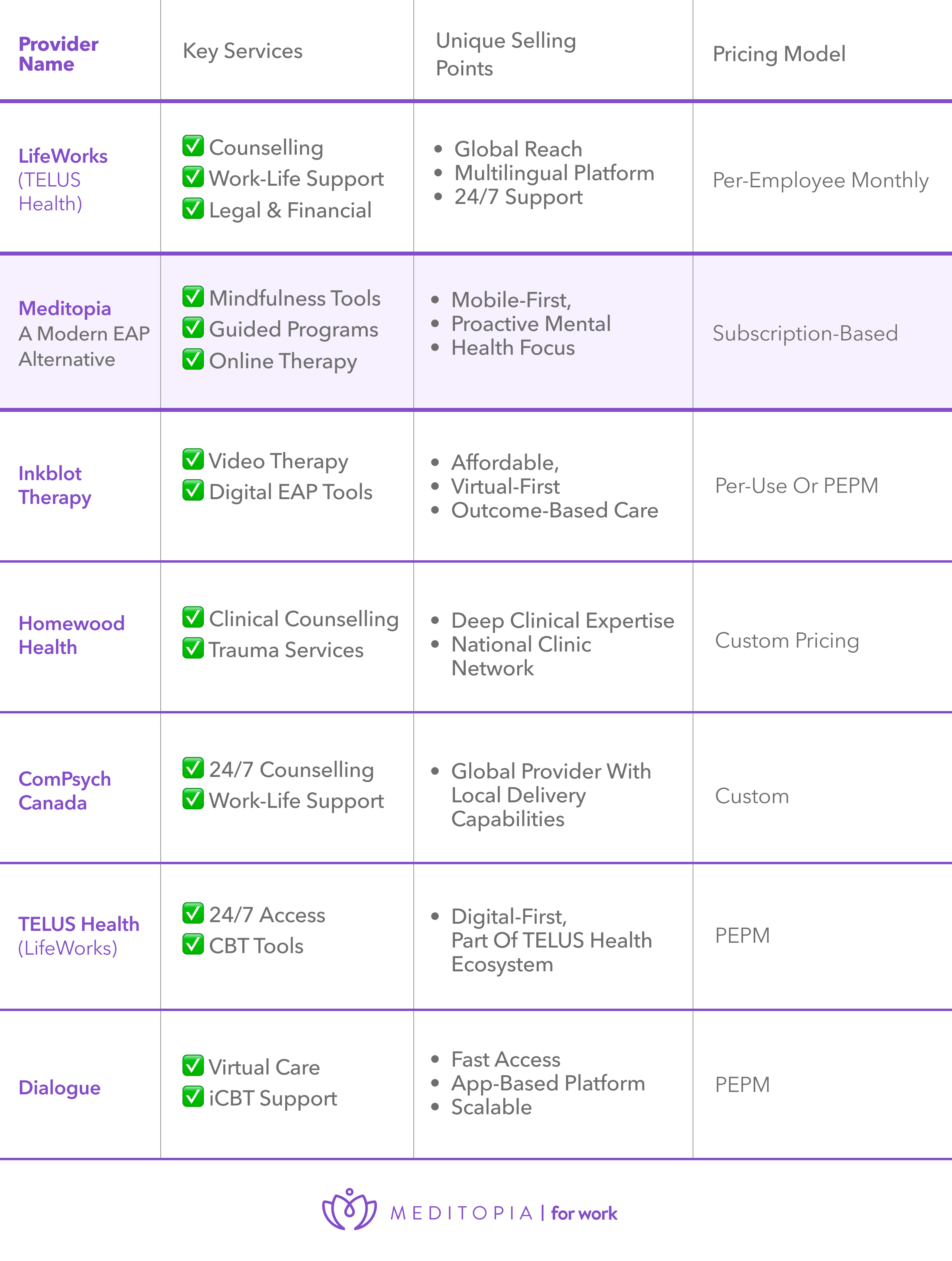

1. LifeWorks (TELUS Health)
LifeWorks, now part of TELUS Health, is one of the largest EAP vendors in Canada and globally. Ideal for mid-sized to enterprise organizations, it offers a full suite of digital and in-person support services.
Key Services
- 24/7 confidential counselling
- Financial, legal, and family support services
- Manager and HR consulting tools
- Interactive mobile app for self-help resources
Unique Selling Points
- Multilingual access and global capabilities
- Advanced analytics for HR teams
- Strong integration with wellbeing strategies
Pricing Structure
- Per-employee, per-month (PEPM) with scalable tiers
2. Meditopia
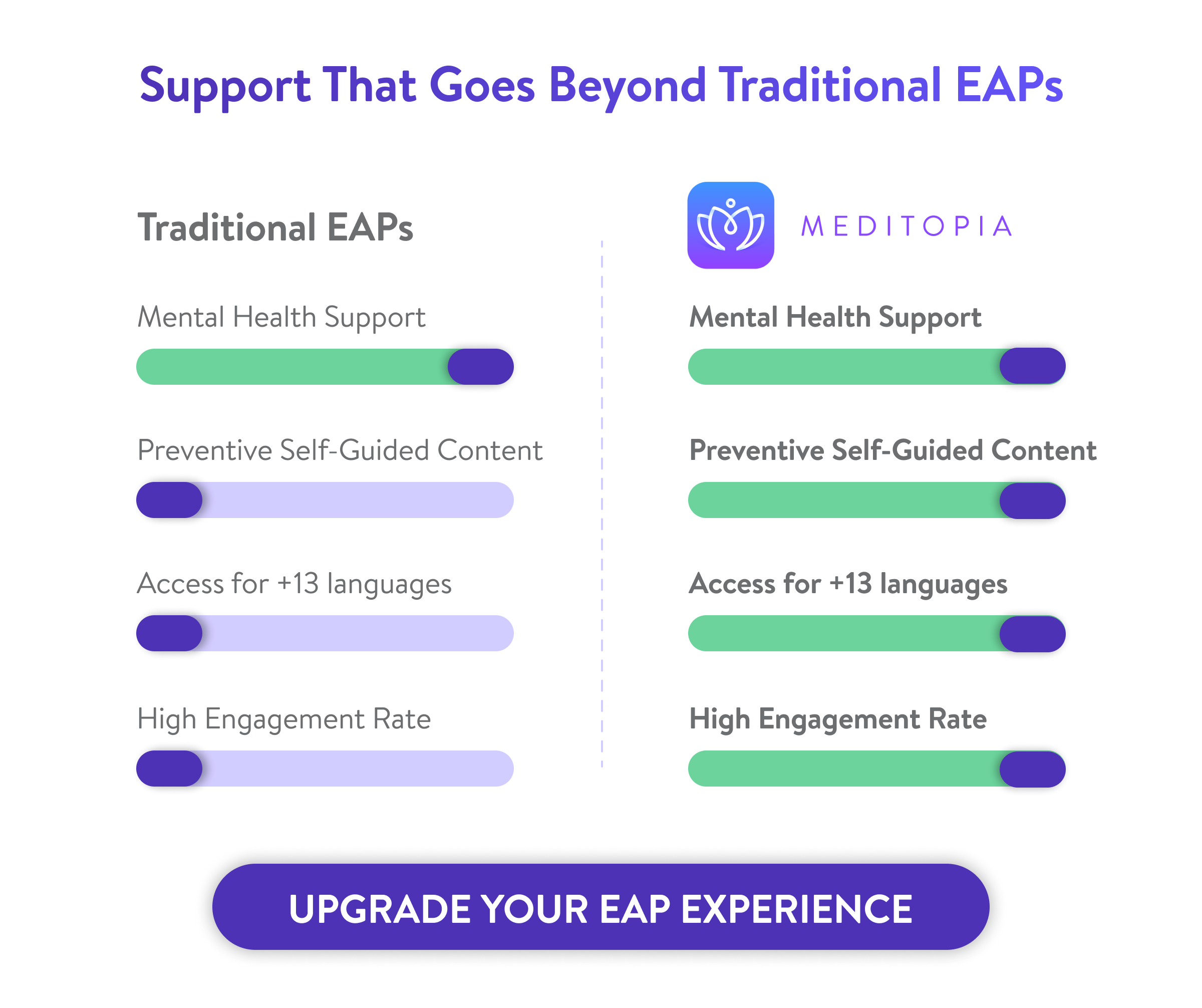
Meditopia is an innovative mental wellness platform that has expanded into corporate wellbeing and EAP-style services. Its proactive and holistic approach to mental health at work emphasizes daily mental fitness for empowerment rather than just crisis response.
Key Services
- Mindfulness and meditation tools
- Emotion tracking and mental fitness journeys
- Guided programs for stress, sleep, anxiety
- HR engagement dashboard
Unique Selling Points
- Supports over 14 languages
- Online therapy in 5 languages
- Empowers proactive, preventive wellness strategies
- Includes SOUL, an AI mental health companion
Pricing Structure
- Per-employee, per-month (PEPM) with scalable tiers
%2008.07.36_4ffe9739.jpg)
3. Inkblot Therapy
As one of Canada’s most tech-forward eap vendors, Inkblot Therapy offers video-first counselling and rapid support access. It’s a solid fit for businesses seeking flexibility and measurable outcomes.
Key Services
- Video therapy and coaching
- Employee wellness content hub
- Return-to-work and crisis intervention
- Real-time reporting
Unique Selling Points
- Therapist-matching algorithm
- Evidence-based outcomes tracking
- Cost-effective for all business sizes
Pricing Structure
- Pay-per-use or PEPM, depending on organizational need
4. Homewood Health
Homewood Health stands out for its clinical depth and broad national reach. It is a go-to provider for organizations in high-stress industries or with complex psychological health needs.
Key Services
- Trauma-informed counselling
- Specialized addiction and recovery programs
- In-patient and outpatient clinic access
- Executive coaching and leadership support
Unique Selling Points
- Owns and operates accredited clinics in Canada
- High-acuity care and crisis intervention
- Strong track record in return-to-work success
Pricing Structure
- Custom pricing based on organization size, industry, and services
5. ComPsych Canada
ComPsych has served Canadian customers since 1989, delivering employee assistance and well‑being programs through local service centres and digital platforms.
Key Services
- 24/7 confidential counselling (in‑person & telehealth)
- Work‑life support: financial, legal, childcare, etc.
- Organizational resiliency and crisis response
Unique Selling Points
- Large, diverse network of experts: counselors, attorneys, financial professionals, crisis teams
- Globally consistent yet locally provided programs across 200 countries
Pricing Structure
- Typically per‑employee or per‑organization, customizable based on services.
6. TELUS Health (including LifeWorks)
TELUS Health offers an EAP that combines mental health support with work/life services for employees and families. It also integrates the LifeWorks platform acquired in 2022.
Key Services
- 24/7 access to mental health professionals
- Digital and face‑to‑face counseling
- Assistance with elder/child care, nutrition, etc.
Unique Selling Points
- Fully digital-first experience with multilingual support across Canada
- Holistic workplace outcome reporting and analytics
Pricing Structure
- Typically subscription‑based per‑employee per‑month (PEPM), with scalable tiers.
7. Dialogue
Dialogue is one of Canada’s leading digital-first EAP companies, offering fast, accessible mental health and well-being support through its integrated virtual care platform. It’s a strong choice for modern organizations looking for scalable, tech-driven employee assistance programs.
Key Services
- Virtual, phone, or in-person counselling within 24hrs
- Support in mental health, career, legal, financial, family, substance use
Unique Selling Points
- High adoption via app-based access
- Dedicated team with consistent follow-up
- Integrated Mental Health+ and Primary Care modules
Pricing Structure
- Subscription PEPM, often bundled with broader health platforms.
8. MindBeacon
MindBeacon is a Canada-based digital mental health provider known for its structured, evidence-based therapy programs delivered entirely online. It supports organizations looking to offer fast, confidential, and clinically grounded mental health care without long wait times.
Key Services
- Guided digital therapy programs based on cognitive behavioral therapy (CBT)
- Secure messaging with licensed Canadian therapists
- Programs for anxiety, depression, stress, and burnout
Unique Selling Points
- Strong clinical focus with structured, goal-oriented care pathways
- Fully digital delivery reduces access barriers and wait times
Pricing Structure
Employer contracts based on enrollment volume and program access
Expanded List of EAP Companies in Canada
EAP Providers in Major Canadian Cities and Regions
While most of the programs in this list of EAP providers operate nationally, many have strong regional delivery models and local clinician networks tailored to key provinces and metropolitan areas.
- EAP providers in Ontario: Providers such as TELUS Health (including LifeWorks) and Homewood Health have extensive coverage across Ontario, supporting large enterprises, public sector organisations, and regulated industries.
- EAP providers in Manitoba: Employers commonly work with Homewood Health and ComPsych, both of which maintain clinician networks and crisis support services accessible throughout the province.
- EAP providers in Montreal: In Quebec, providers such as Dialogue and TELUS Health are frequently selected for their bilingual (French–English) service delivery and strong digital-first care models.
- EAP providers in Calgary: Organisations in Calgary often partner with Homewood Health and Inkblot Therapy, particularly in energy, engineering, and high-pressure corporate environments.
How to Choose the Right EAP Provider in Canada
Selecting the right employee assistance program provider depends on several organizational factors, starting with a deep understanding of your employee needs and challenges. Here's what HR leaders should consider:
- Company Size: Larger organizations may need scalable, global EAPs like Meditopia. Smaller companies may not care much about the languages available, but rather the content scope.
- Industry Needs: High-stress industries (healthcare, tech, first responders) might require providers with trauma and clinical support, like Homewood Health.
- Workforce Diversity: Ensure the provider offers multilingual support and cultural competence, critical in Canada’s diverse labour force.
- Digital vs. In-person: Evaluate if your workforce prefers digital-first (Inkblot, Meditopia) or a mix of in-person and online services.
- Pricing & ROI: Consider whether you're looking for cheap alternatives or more comprehensive, premium offerings with detailed ROI tracking.
Are EAPs Mandatory for Businesses in Canada?
No, Employee Assistance Programs (EAPs) are not legally mandatory in Canada. However, Canadian employers do have clear legal responsibilities to protect employees’ psychological health, and EAPs are widely used as a practical way to meet those expectations.
What the Law Requires (Even Though EAPs Aren’t Mandatory)
Canadian legislation does not state that employers must provide an EAP. Instead, it establishes a broader obligation to protect both physical and psychological health at work.
Moreover, at the federal level, the Canada Labour Code requires federally regulated employers to ensure the health and safety of their employees, including protection from psychological hazards. This duty is reinforced by provincial legislation, such as Ontario’s Occupational Health and Safety Act.
Across jurisdictions, employers are expected to:
- Take reasonable precautions to protect employee health and safety
- Identify and manage psychosocial hazards such as stress, burnout, harassment, and excessive workload
- Respond appropriately when mental health risks or incidents arise
- Provide access to support and accommodation when employees are affected
While an EAP is not named as a legal requirement, it is commonly viewed as:
- A reasonable and proactive control measure for psychosocial risks
- Evidence that an employer took preventive and supportive action
- A structured way to provide confidential access to qualified mental health support
Why Many Canadian Employers Adopt an EAP (Even If Not Required)
Despite not being mandatory, EAPs are increasingly common across Canadian workplaces. Here’s why many organisations implement them anyway:
- Meeting Psychological Health and Safety Expectations
EAPs provide a tangible mechanism for early intervention, confidential support, and crisis response. - Bridging Gaps in Public Mental Health Access
Although Canada has universal healthcare, access to timely mental health services can be limited due to wait times and regional shortages.- EAPs help employees access support faster, reducing prolonged absences and productivity loss.
- Managing Absenteeism and Disability Claims
Employers often use EAPs to support early recovery and facilitate return-to-work processes. - Employee Expectations and Employer Reputation
Offering an EAP signals that an employer values wellbeing, which can positively influence engagement, retention, and employer branding. - Supporting Diverse and Multicultural Workforces
Many employers adopt EAPs specifically to provide multilingual, culturally sensitive support, helping reduce stigma and increase access across different employee groups. - Support During Organisational Change and Crisis
EAPs are frequently relied upon during:- Restructuring or layoffs
- Workplace conflicts or harassment complaints
- Critical incidents or traumatic events
- High-pressure periods linked to remote or hybrid work
Why EAPs Are Essential for Businesses in Canada
Mental health is increasingly recognized as a critical workplace issue in Canada. According to the Mental Health Commission of Canada, 70% of Canadian employees are concerned about the psychological health and safety of their workplace [2].
Additionally, the rise in burnout, stress-related absenteeism, and hybrid work challenges is driving HR leaders to seek proactive mental health solutions. EAPs for small businesses and larger corporations have become a foundational tool not only for crisis support but also for everyday mental wellness.
Here’s why EAPs services are now essential in Canadian organizations:
- Legal and Regulatory Compliance: Canadian labour laws, such as the Canada Labour Code and provincial acts like Ontario's Occupational Health and Safety Act [3], emphasize employers' duty to protect employees’ psychological health.
- Offering EAP solutions demonstrates compliance with evolving standards in workplace mental health.
- High Prevalence of Mental Health Issues: Approximately 500,000 Canadians are unable to work each week due to mental health problems [4].
- This reality translates to lower productivity and higher costs for businesses.
- EAPs provide quick access to EAP mental health providers, reducing downtime and improving recovery outcomes
- Government and Industry Support: While not mandatory, the Canadian government actively encourages mental health support in the workplace.
- Programs such as Wellness Together Canada [5] reflect national priorities and offer frameworks that businesses can adopt alongside EAP service providers.
- Workplace Culture & Retention: A psychologically safe workplace improves retention, morale, and engagement.
- In fact, a Deloitte study [6] found that for every $1 invested in mental health programs, the median return is $1.62.
- Employee Assistance Program Providers contribute to a stronger culture and show employees that their wellbeing is valued.
- Multicultural and Multilingual Workforce Needs: Canada's workforce is one of the most diverse in the world.
- Many EAP counselling providers like Meditopia offer services in multiple languages and understand cultural nuances, which helps break stigma and increases utilization among diverse employee groups.
- Impact of Remote and Hybrid Work: The shift to remote and hybrid work has blurred the boundaries between professional and personal life.
- EAPs now offer flexible digital access, making support available anytime, anywhere.
To discover more relevant statistics about mental health at work or the importance of mental health in the workplace, and corporate wellness companies in Canada, please read our specialized blogs.
EAP Usage Statistics in Canada
Whether you're benchmarking, planning promotion, or building a business case, these evidence-based insights can help you understand how Canadians access and perceive Employee Assistance Programs.
- Limited Coverage: Only 33% of Canadians report having access to EAP companies either through their own employer or via someone in their household, revealing significant coverage gaps nationwide [7].
- Modest Utilization Rates: Utilization tends to be low, a study found usage averaging just around 11% in Canada, despite widespread availability [8].
- A broader analysis showed utilization rates ranging from 2.5% to 29.3% [9].
- This is often due to lack of internal promotion and trusting old EAP models.
- Low Awareness: Approximately 40% of workers in Canada don’t know what an EAP is or what it offers [10].
- 34% don’t know what it covers
- 23% worry about confidentiality
- 21% don’t know how to access the service
Essentially, this means that EAPs do have benefits in terms of employee wellbeing and organizational ROI, but they must be engaging, culturally valid, and well promoted to work.
Corporate EAPs Around the World: Insights by Country
Curious about other global EAP providers? Discover localized insights into how workplace wellness is shaped by culture, infrastructure, and discover innovative EAP solutions around the globe.