




Employee wellness program statistics now play a central role in shaping HR strategies, helping companies understand what employees need, where wellbeing gaps exist, and which interventions drive results. This guide brings together the latest insight, trend data, and organisational wellbeing research from trusted sources, for HR professionals, managers, and decision makers to develop a healthier workplace this 2026.

Global Workplace Wellbeing Statistics at a Glance
Around the world, organisations are seeing a clear shift in how employees relate to their mental health, stress levels, and wellbeing at work. These global workplace wellness statistics reveal the latest insight into burnout, access to support, and program participation
You can learn more about EAP utilization rates in our specialized blogs.
Workplace Wellbeing Statistics by Region
Mental health at work sin't the same around the world. Below is a region-by-region breakdown of the latest employee wellness statistics covering mental health, burnout, workplace wellness programs, financial stress, absenteeism, and employee engagement trends.
UK Workplace Wellbeing Statistics
Workplace wellbeing statistics in the UK indicate some of the highest burnout and stress levels in Europe. Cost of living pressures and rising mental-health-related absenteeism continue to shape employer priorities.
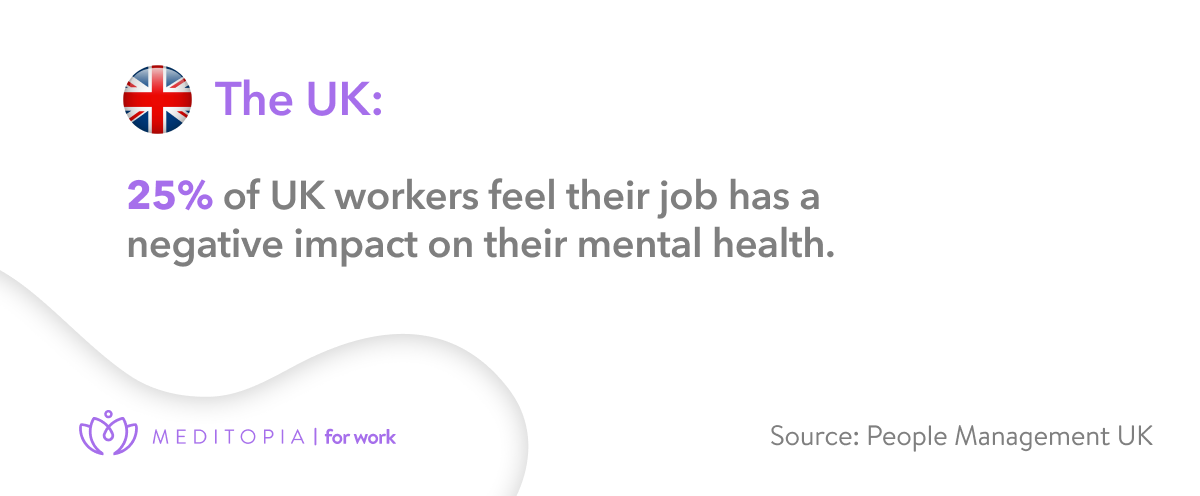
- 76% of UK workers reported moderate to high stress levels (up from 59% in 2021) [1].
- 63% of UK organisations saw an increase in mental-health-related absences [2].
- Cost of poor mental health to UK employers: £51 billion per year [3].
- Only 29% of UK employees say they are “thriving at work” [4].
Europe Workplace Wellbeing Statistics
Workplace wellness statistics across Europe highlight chronic stress, demographic workforce shifts, and increasing investments in workplace health promotion.
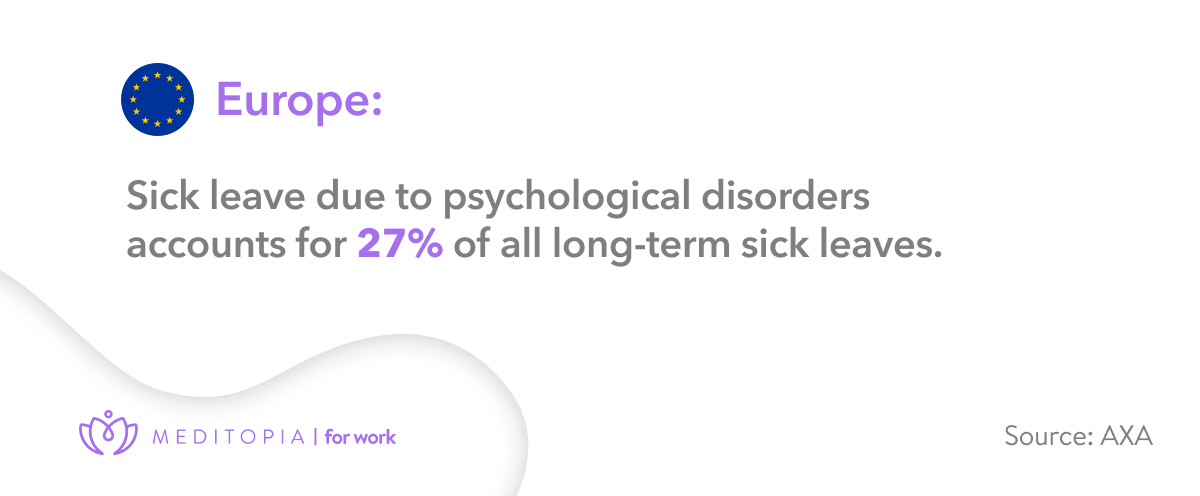
- Across the EU, 44% of employees report work-related stress [5].
- 18 million construction workers in the EU are at risk of mental health issues [6].
- Stress is reported as the second most common work-related health problem in the EU, affecting 44% of workers [7].
- Musculoskeletal and psychosocial disorders account for over half of all work-related health problems in the EU [8].
Canada & US Workplace Wellbeing Statistics
North America leads in adopting digital wellbeing tools, EAP usage, and hybrid work models, yet burnout levels remain high.
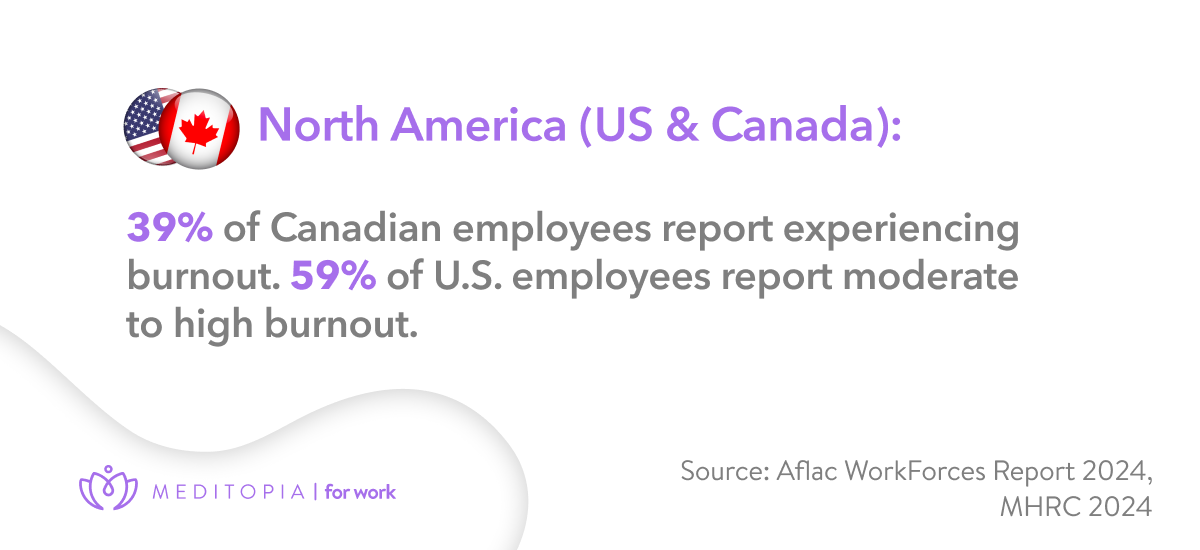
- Burnout affects 52% of US employees [9].
- 57% of US and Canadian workers report daily stress [9].
- 1 in 3 Canadian workers report high levels of psychological distress [10].
- Mental-health-related disability claims up 28% in Canada [11].
Asia & Australia Workplace Wellbeing Statistics
Asia-Pacific regions show rapidly growing investment in organisational wellbeing, especially in digital wellbeing tools and holistic wellness offerings.
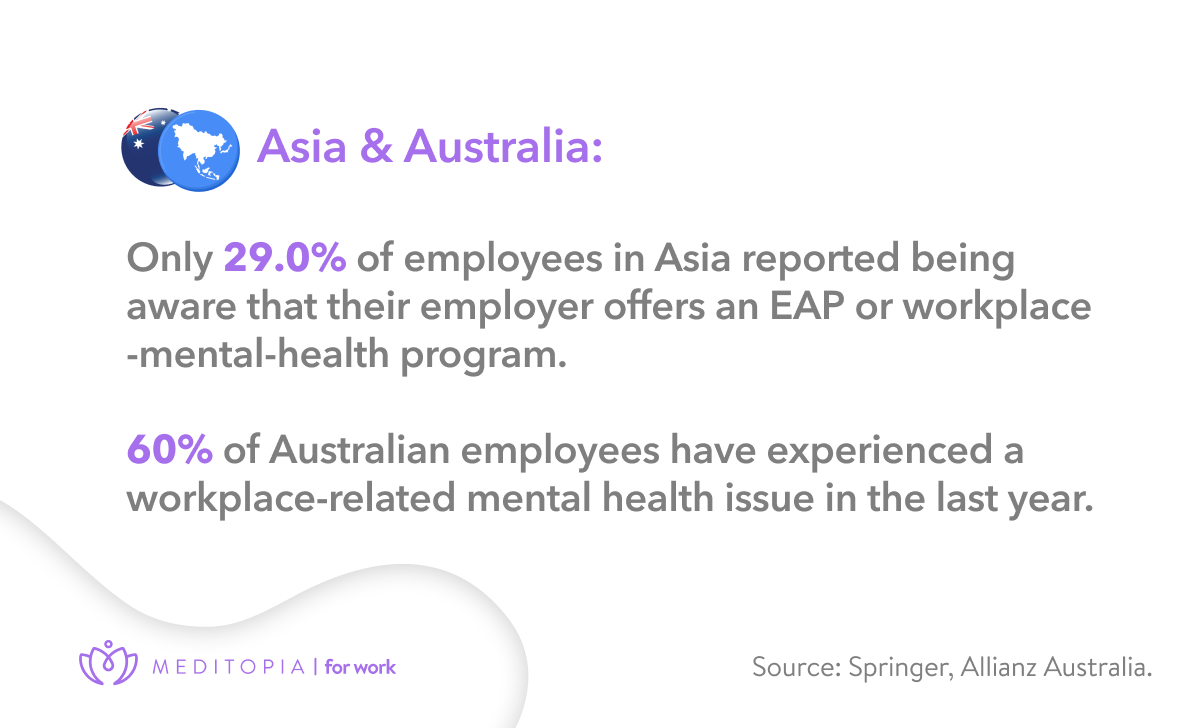
- 47% of employees in Singapore report feeling burned out [12].
- More than half of Australian workers hide a mental or even physical health condition to avoid discrimination at work [13].
- Australia: 1 in 3 workers experience high psychological distress [14].
- 35% of Indian employees say their mental health declined in the past year [15].
- Psychological injury claims in Australia represent 9% of all serious workers’ compensation claims [16].
- In Hong Kong, 60% of employees report poor mental wellbeing [17].
- 78% of workers in the Philippines have a moderate to high risk of experiencing mental health issues [18].
Employee Wellness Program Statistics & Participation
Employee wellness programs are widely available, yet engagement remains one of HR’s greatest challenges.The table below summarises key global statistics on program awareness, EAP utilisation, participation, preferred support channels, and the measurable impact of wellness initiatives.
Discover here wellness a program budget example.
Employee Financial Wellness Statistics
Financial wellbeing is one of the strongest predictors of overall employee mental health, engagement, and productivity. The following evidence-based insights show how money-related stress affects performance and why organisations are expanding financial wellbeing benefits.
- 57% of employees report that money is their top source of stress, making financial pressure a leading contributor to poor workplace wellbeing [19].
- Financial stress causes workers to lose an average of three hours of productive time per week [20].
- Employees experiencing high financial stress are twice as likely to be looking for a new job [21].
- Employees under financial strain are four times more likely to be absent or tardy due to stress-related sleep issues, secondary employment, or mental health challenges [22].
Health and Wellness in the Workplace Statistics
Evidence from global research consistently shows that companies prioritising structured wellbeing initiatives experience meaningful improvements across multiple workforce outcomes.
- Workplace wellness programs reduce sick days by an average of 1.5 days per employee per year [23].
- Employees who feel supported in their wellbeing are three times more likely to be engaged at work.
- Organisations with strong wellbeing strategies see up to 11% lower turnover, reinforcing the connection between proactive mental health support and long-term retention [24].
- Research also shows that employees participating in structured wellbeing initiatives report significant reductions in burnout symptoms.
- As part of global workplace wellness program statistics, organisations with integrated health promotion approaches are increasingly documenting improvements in:
- Employee resilience
- Higher participation in organisational activities
- Fewer stress-related performance dips
Workplace Wellbeing Statistics by Industry
Wellbeing risks aren’t evenly distributed, workload patterns, exposure to trauma, customer pressure, and safety conditions can make certain industries more vulnerable than others. Here are some stats you may want to consider:
How to Use These Workplace Wellbeing Statistics in Your HR Strategy
So, now tha tyou have all this information... What can you do with it? HR teams can use this data to design more effective, equitable, and evidence-driven wellbeing strategies.
1. Build a Strong Business Case
- Use global data on stress, absenteeism, and productivity loss to quantify organisational risks.
- Incorporate cost-of-poor-mental-health figures to justify investment.
- Highlight ROI benchmarks.
- Demonstrate the link between wellbeing and retention, using turnover reduction statistics as supporting evidence.
2. Prioritise Interventions by Region
- Different regions experience different stressors; tailor programs using regional wellbeing statistics.
- For example, high burnout among North American workers may require access to digital mental health tools, while European workforces may need stronger psychosocial risk prevention.
- Use local data to determine whether to emphasise counselling, financial wellbeing support, workload interventions, or manager training.
3. Design a Holistic, Equitable Wellbeing Program
- Ensure that mental, physical, and financial wellbeing are covered, not just one category.
- Provide multiple access points (counselling, self-guided digital tools, workplace trainings, AI companionship)to accommodate various employee preferences.
- Address barriers uncovered in the data /stigma, fear of career repercussions).
- Ensure wellbeing resources are culturally sensitive and accessible for diverse workforce groups.
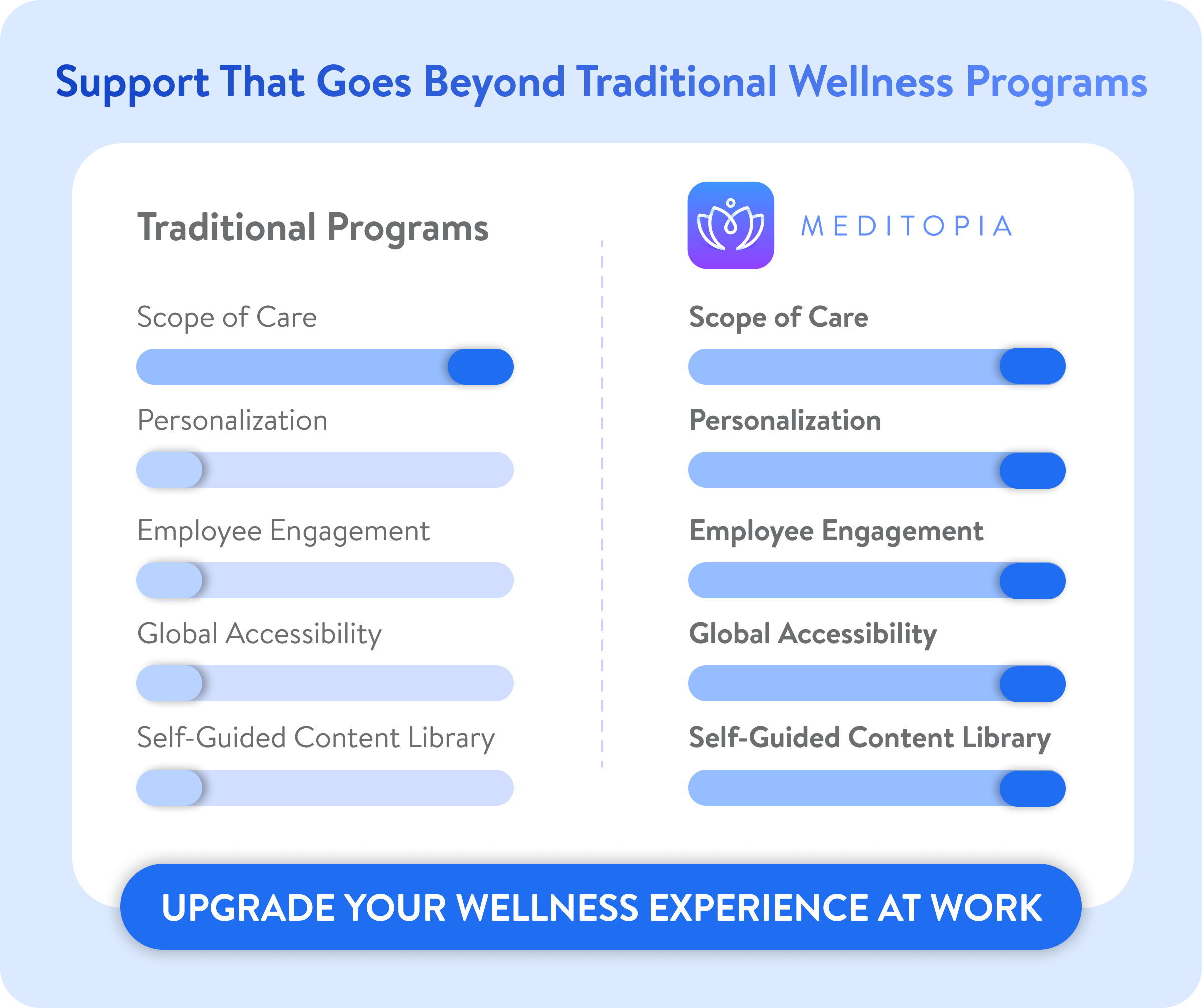
- Meditopia for Work offers all of this and more! Send us a mesage to discuss specific solutions to your unique corporate wellbeing needs today.
4. Increase Awareness and Engagement
- Communicate programs clearly across multiple channels: onboarding, emails, manager reminders, intranet, and mobile apps.
- Equip managers with scripts or talking points to normalise conversations around wellbeing.
- Leverage champions or ambassadors to reduce stigma and highlight early wins.
5. Measure Success Continuously
- Track utilisation, satisfaction, EAP engagement, stress scores, absenteeism, and turnover trends.
- Compare year-over-year changes to evaluate whether interventions reduce burnout or improve engagement.
6. Make Preventive Care the Foundation
- Prioritise proactive mental health support (education, early screening, coaching) instead of reactive-only interventions.
- Use data to identify high-risk groups (e.g., frontline workers, high-turnover teams, hybrid employees).
- Meditopia for Work can help you design preventive plans, send us a message to discuss more!