




Employee Christmas stress is not simply a personal issue that happens to overlap with work; it is frequently shaped and intensified by organizational structures, workload expectations, and cultural norms around availability and performance. Let's navigate workplace christmas stress, and what to do to reduce it before it develops into something more challenging.

Employee Christmas and Holiday Stress Statistics
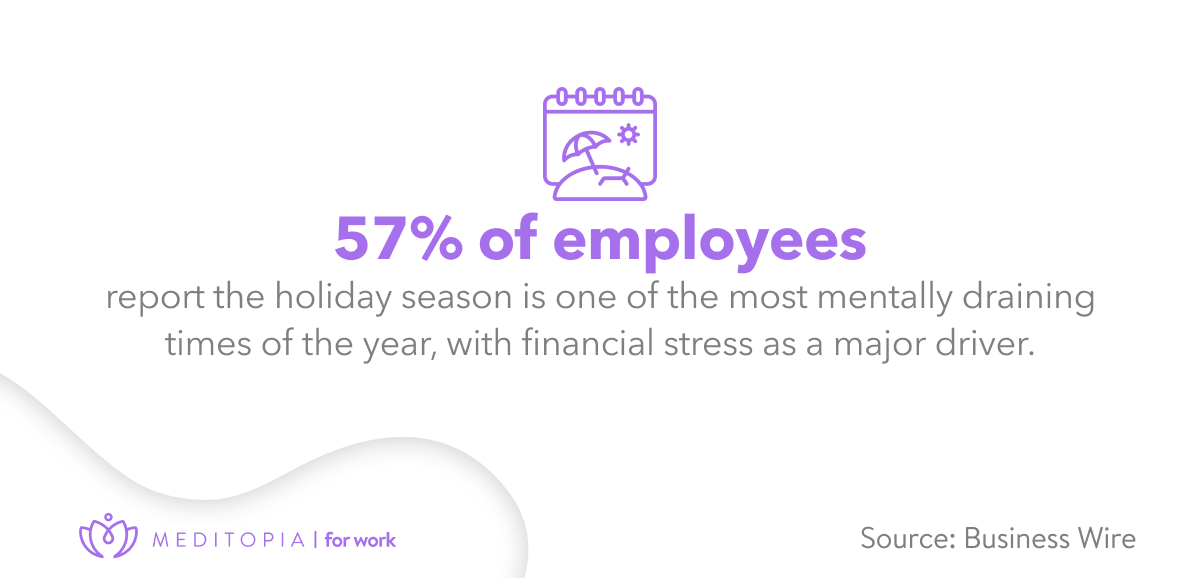
While “holiday stress” is often discussed anecdotally, research consistently shows that stress levels rise during the festive season, including among working populations.
Key findings from reputable sources include:
- Around 40% of adults report increased stress during the holiday season, with time pressure and financial strain cited as primary contributors [1].
- In workforce-focused surveys, over half of employees report feeling more stressed than usual during the holidays, and a meaningful subset report a decline in overall wellbeing [2].
- More than 50% report checking email or continuing to work during holiday leave, often to prevent post-holiday overload [3].
- Harvard-affiliated research highlights that stress during the holiday period affects sleep quality, emotional regulation, and cognitive functioning, all of which directly influence workplace performance [4].
- Research on seasonal workload fluctuations shows that stress rises when demand increases without corresponding adjustments in staffing, expectations, or recovery time [5].
Main Causes of Workplace Christmas Stress
Think about your own experience. Workplace Christmas stress rarely stems from a single factor. Instead, it reflects the accumulation of professional, financial, and emotional demands during a compressed period. Here are some causes:
Work-related causes
- Year-end deadlines and reporting cycles
- Performance reviews, bonus decisions, and goal evaluations
- Increased workload due to colleagues’ planned leave
- Unclear priorities when “everything feels urgent”
- Pressure to remain available despite official time off
- Client, customer, or stakeholder expectations before year-end
Personal and emotional causes that interact with work
- Financial pressure during holidays, including gifting, travel, and higher living costs
- Family and caregiving responsibilities, which often intensify during school breaks
- Social expectations around participation in events and celebrations
- Loneliness in the holiday season, particularly for employees living away from family
- Seasonal anxiety and disruptions to sleep or routines
Structural contributors
- Poor work-life boundaries and “always-on” cultures
- Lack of psychological safety, making it difficult to express overwhelm
- Limited access to mental health support like Meditopia during peak stress periods
Impact of Christmas Stress on Workplace Performance
Employee mental health over Christmas gets affected by many stressors, and it impacts employee personal and professional life. If the separation between personal and work life is also compromised, the impact will be more significant.
Cognitive and performance impacts
- Reduced concentration and decision-making capacity
- Slower task execution and increased error rates
- Difficulty prioritizing and planning effectively
Engagement and behavioural impacts
- Lower discretionary effort
- Increased irritability and interpersonal tension
- Withdrawal from collaboration or communication
Attendance-related impacts
- Increased short-term sick leave
- Presenteeism, being physically present but mentally depleted
Longer-term risks
- December burnout that carries into Q1, reducing momentum in the new year
- Elevated risk of disengagement or turnover following prolonged stress exposure
From a management perspective, ignoring holiday stress often means paying for it later through reduced productivity, strained teams, and slower recovery in the new business cycle.
How Managers Can Support Employees During the Christmas Period
Managers are uniquely positioned to reduce workplace Christmas stress because they shape daily expectations, priorities, and norms. Still, it would be advisable for both, managers and the company, to invest in mental health training for managers. You can contact Meditopia for Work to know more about our webinars and workshops.
Here are some ways you can support your team manage festive season stress:
Core, expected supports
- Advance workload planning to avoid last-minute pressure
- Clear prioritization, explicitly stating what can wait until January
- Realistic deadline setting that accounts for leave and reduced capacity
- Encouraging employees to take time off, not just approving it
- Modelling healthy boundaries, such as delayed responses during leave
- “Capacity check” one-to-ones: Use December 1:1s to discuss capacity, not performance. Ask what feels heavy and what support would help.
- Explicit de-prioritization, actively name tasks that will not be pursued before year-end. Removing work can be more powerful than adding support.
- Temporary expectation resets: Acknowledge that response times, output volume, or meeting cadence may shift during this period.
- Encourage teams to avoid internal meetings during holiday weeks, not just external ones.
- Acknowledge emotional labour, coordination, and support roles that often intensify at year-end but go unmeasured.
How HR Teams Can Reduce Workplace Christmas Stress
HR’s role is not to eliminate stress entirely, but to ensure that organizational choices do not unnecessarily amplify seasonal pressure. In fact, HR teams influence stress at a structural level by shaping policies, systems, and communication.
Effective HR-led interventions include:
- Clear holiday operating guidelines, including response-time expectations
- Transparent coverage plans to prevent hidden overload on remaining staff
- Flexible PTO practices, particularly around partial days or bridging leave
- Year-end prioritization frameworks that help teams align on what truly matters
- Guidance for inclusive celebrations, avoiding assumptions about participation or religious observance
- Manager enablement, including training on recognizing burnout and supporting mental health conversations
How EAPs & Wellbeing Programs Help Employees Manage Holiday Stress
Weather you work in the tech industry, manufacturing, or healthcare, well-designed wellbeing programs like Meditopia for Work can buffer the impact of employee mental health over christmas when they are accessible, relevant, and timely.
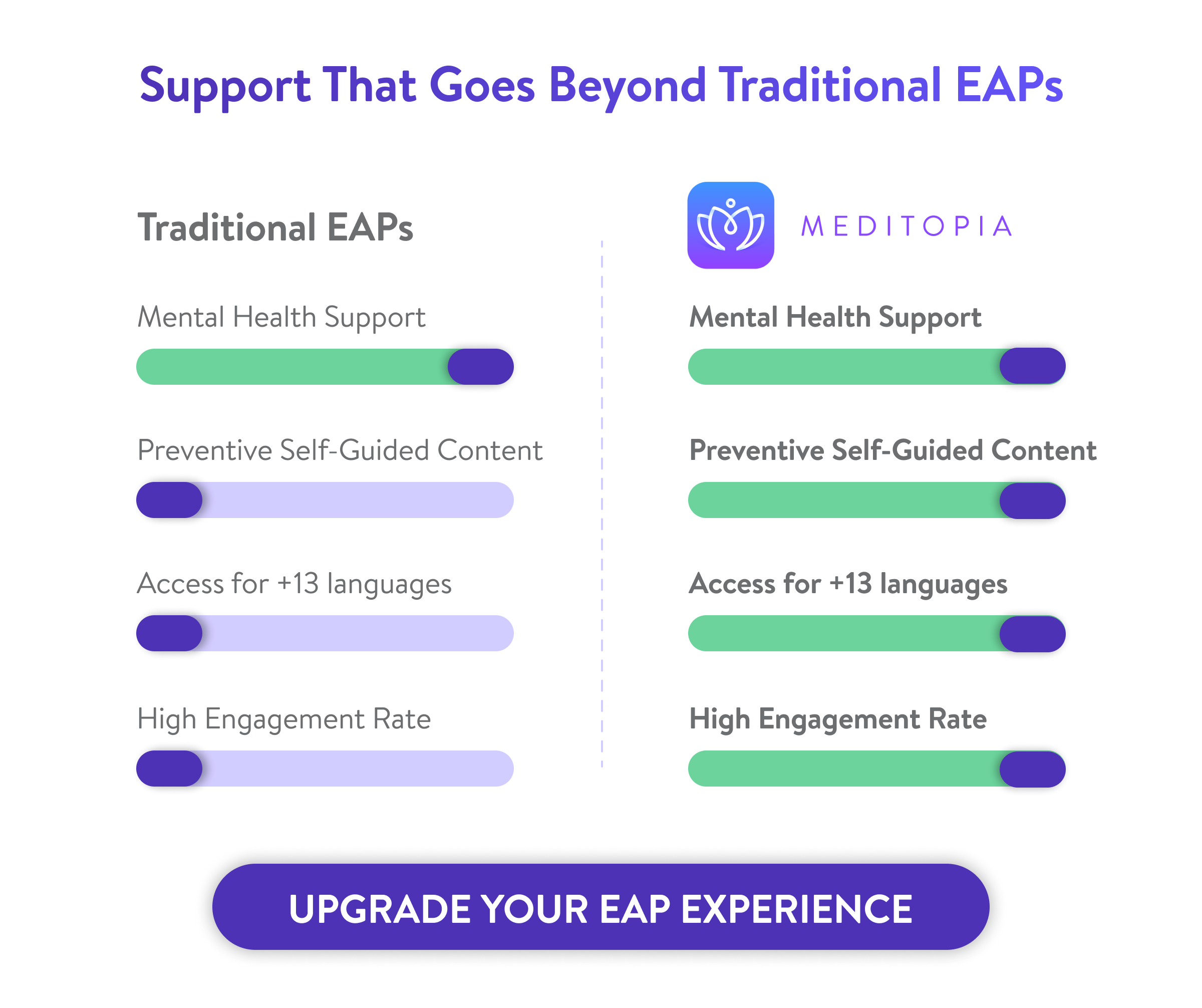
Meditopia for Work is an EAP that gives you access to 1-1 expert sessions, online trainings for employees and managers, stress evaluations, 1000+ self-guided pieces of content, and gym facilities across your city. We work in 14 languages, and offer therapy in 5. If you want to decrease stress during peak seasons, contact us to discuss exclusive solutions to your unique challenges.
Holiday Stress in Different Industries
Holiday stress varies significantly by industry due to differences in demand cycles, customer interaction, and operational flexibility.
- Retail workers face sustained peak demand from late November through December.
- Research highlights increased psychological strain, emotional labour, and exposure to customer aggression during the festive season [6].
- In related logistics and warehouse roles, around 40–45% of workers report elevated stress during peak holiday periods, driven by long hours and performance pressure [7].
- One UK study found 73% of retail employees considered quitting ahead of Christmas, citing workload and mental health concerns [8].
Logistics and Supply Chain:
- Holiday e-commerce surges compress timelines and increase shift length
- Performance monitoring and delivery targets intensify stress
Hospitality and Customer Service
- Increased customer volume, irregular shifts, and emotional labour
- Limited ability to take leave during peak periods
- Stress amplified by customer expectations and time sensitivity
- Continuous service demand limits time off
- Seasonal illness increases workload
- Emotional strain from patient care intersects with holiday stress
Office, Tech, and Professional Services
- Stress driven less by customer volume and more by year-end deadlines, performance reviews, and budget cycles
- Research shows anxiety increases when professional pressure coincides with financial and social holiday demands