

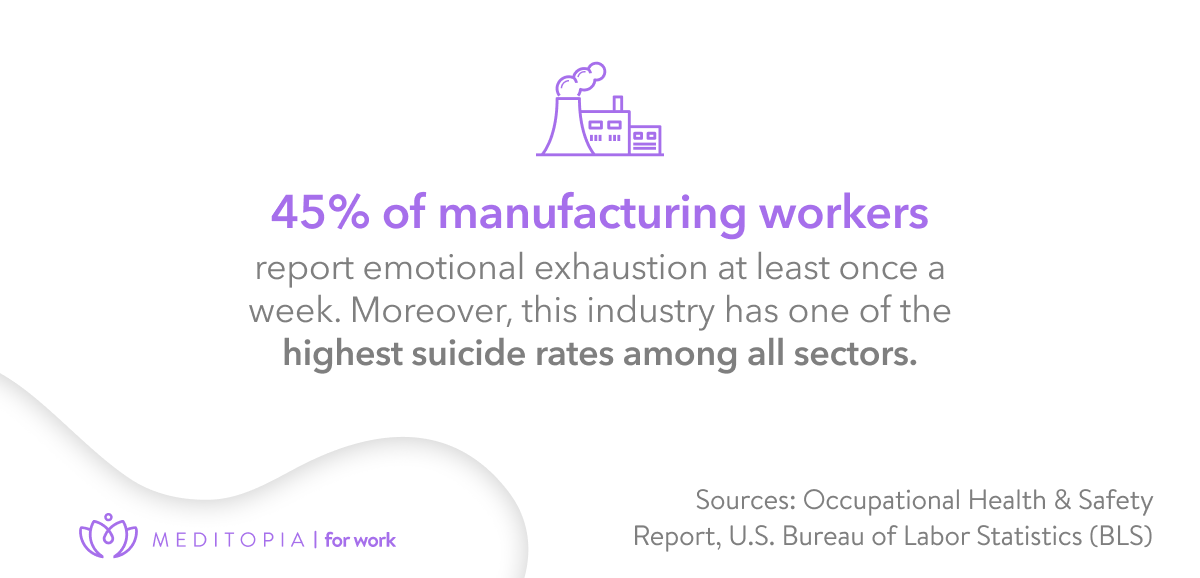
Surveys indicate that ≈25% of manufacturing workers state their work environment negatively affects their mental health [1]. This not only affect their personal lives, it also impacts work productivity, motivation, and loyalty. For HR leaders and decision-makers in the manufacturing industry, investing in an employee assistance program can change the game, let's discover how.

Why EAPs Matter in the Manufacturing Industry
Implementing a robust EAP in manufacturing is critical because workers in this industry face unique stressors that combine physical, psychosocial, and organisational challenges. Key reasons include:
- High prevalence of work-related stress and mental-health risk: 27 % of workers across Europe (including industrial sectors) report stress, anxiety or depression caused or worsened by work, often driven by work intensity or unsocial working hours, both common in manufacturing shift patterns [2].
- Significant share of manufacturing workers report mental health impact: One in four manufacturing workers say their work environment has harmed their mental wellbeing.
- Burnout and poor job quality are widespread: Across European workplaces, rising burnout levels have been linked to job intensity and organisation issues, risks that tend to cluster in sectors like manufacturing [3].
- Challenges measuring mental-health impact make support less visible: 69 % cannot easily access mental-health metrics, and only 26 % actually measure the impact of mental-health efforts, a barrier that makes it harder to justify wellbeing investments without structured programs [4].
- Combining physical and psychological risks: Manufacturing often involves ergonomic strain, repetitive tasks, shift rotations, and safety hazards, creating a dual burden of physical and mental stress that demands comprehensive support via an EAP.
Because of these compounded pressures, a digital EAP tailored to manufacturing specific challenges becomes essential for maintaining workforce wellbeing and organisational resilience. You can also learn more about EAP benchmarking in our specialized blog.

EAP Use Cases in Manufacturing
Real-world workplace dynamics often reveal how, when properly implemented, an EAP can address common manufacturing challenges. For example:
Many manufacturing employees face unpredictable production peaks, rotating shifts, repetitive tasks, or post-injury recovery, all of which can erode mental and physical wellbeing. A well-designed employee assistance program offers targeted support precisely when it’s most needed. Below are illustrative scenarios:
Key Benefits of EAPs for Manufacturing Companies
When a manufacturing company invests in a comprehensive EAP, the gains extend beyond individual wellbeing. They yield measurable organisational value. Key benefits include:
- Reduced absenteeism and presenteeism:
- Improved retention and talent retention in a competitive labour market:
- Tailored wellness programs in manufacturing contribute to higher employee satisfaction and loyalty, critical in an industry with skilled-labor shortages. Employers that address mental health and wellbeing stand out.
- Enhanced morale, resilience and team cohesion:
- When workers feel supported (mentally and physically) they are more resilient during high-demand periods, and team dynamics improve thanks to better communication, stress coping and conflict resolution.
- This is why Meditopia for Work is offering access to hundres of gym facilities in your city, beyond 1-1 expert sessions and self-guided content.
- Lower risk of long-term health issues and injury-related costs:
- By combining ergonomic guidance, mental health support, and stress management, EAPs help mitigate risks related to musculoskeletal disorders, chronic stress or burnout, potentially reducing medical and insurance costs over time.
- Better compliance with psychosocial risk regulations and workplace wellbeing standards:
- With growing awareness about psychosocial risks at work, offering an EAP boosts employer responsibility towards worker mental health and can help meet regulatory or voluntary wellbeing requirements.
- Stronger employer branding and competitive advantage:
- In industries like manufacturing and banking (often perceived as high-stress or “blue-collar only”) offering mental health support signals progressive employer practices, improving attractiveness to new talent and aligning with modern workplace wellbeing expectations.
Essentially, for companies serious about resilience, productivity and long-term sustainability, a well-implemented EAP is a strategic differentiator.
How to Implement an EAP in a Manufacturing Organization
Rolling out an EAP in a manufacturing context requires deliberate planning and consistent follow-through. Here’s a step-by-step implementation framework tailored to industrial settings:
- Conduct a wellbeing needs assessment
- Launch confidential employee surveys or focus groups to identify key stressors: shift work fatigue, physical strain, mental load, safety-related anxiety, etc.
- Combine with occupational safety data (injuries, absenteeism, turnover) to map where interventions are most needed.
- Select the right EAP vendor (traditional vs digital EAP manufacturing)
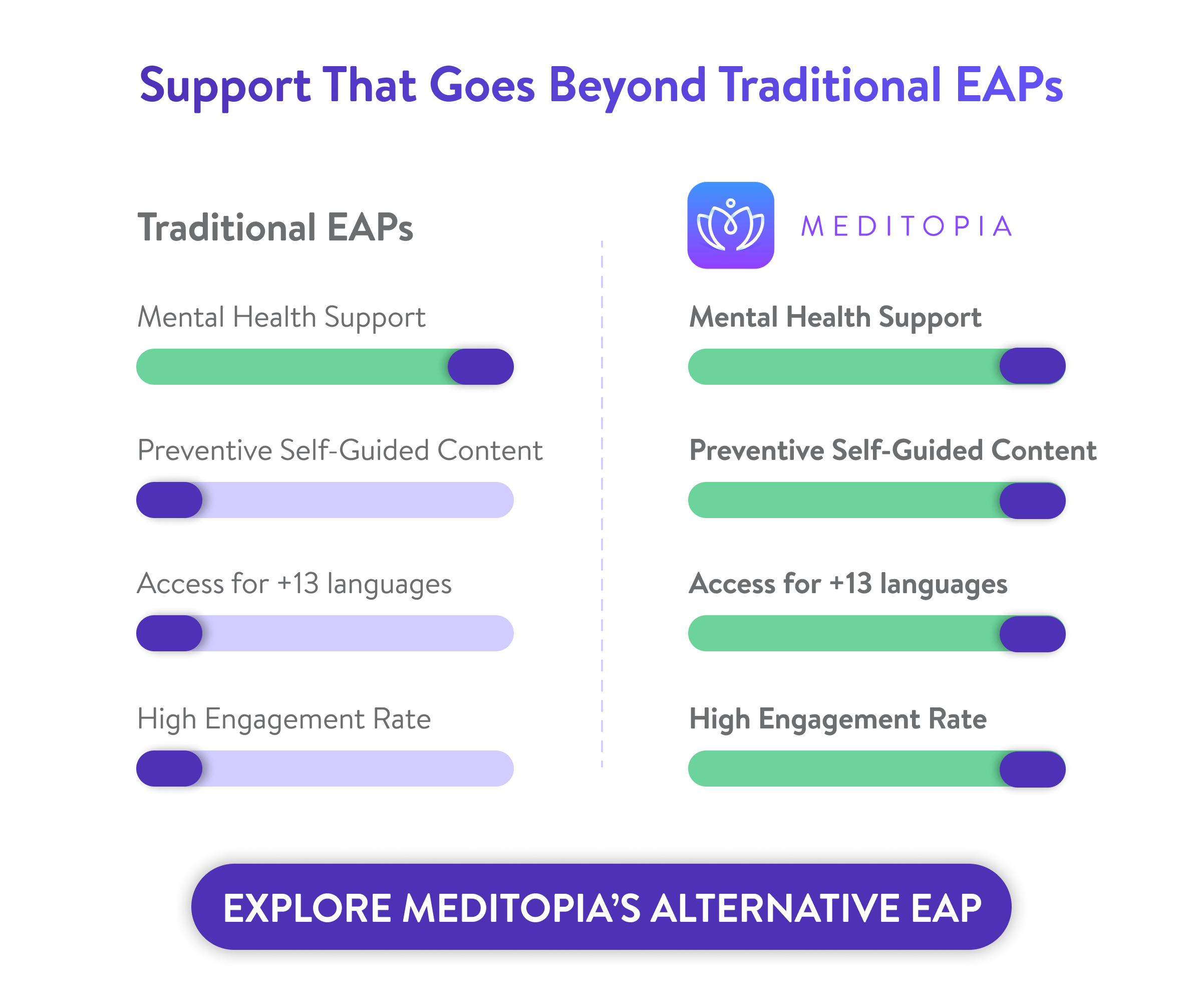
- Given shift-work, rotating schedules, and often limited desk-time, digital EAP solutions (accessible via mobile, 24/7, asynchronous) tend to work best in manufacturing environments.
- Ensure the vendor’s services are confidential, multilingual, and flexible enough to be used outside standard office hours.
- Meditopia for Work has content in 14 languages, 1-1 expert sessions, access to gym facilities, personal trainers, veterinarians, and more! Send us a message to discuss your unique challenges, and how we can tackle them in only 8 weeks.
- Communicate the program and build trust internally
- Launch a clear internal communication strategy: posters in common areas, toolbox talks, shift-handover briefings, onboarding sessions, and manager endorsements.
- Emphasise confidentiality, voluntary access, and normalize mental health suppor.
- Measure engagement and outcomes
- Track usage metrics: number of sessions, active users, repeat usage, while respecting anonymity.
- Monitor proxy outcomes: reduction in absenteeism/presenteeism, lower injury recurrence, retention rates, self-reported wellbeing improvements.
- Continuous refinement and feedback loop
- Collect worker feedback periodically (e.g., quarterly) to understand barriers or unmet needs.
- Adapt offerings: e.g., add ergonomic guidance, fatigue management, sleep support for shift workers or group workshops for team-level issues.
- Integrate EAP data with broader occupational safety and wellbeing metrics to reinforce ROI and align with corporate responsibility goals.
As always, Meditopia can take care of all these steps for you.
EAPs in Manufacturing vs. Other Industries
Comparing manufacturing with other sectors helps understand why EAP manufacturing needs a tailored approach, combining mental health, physical wellbeing, and operational realities.