

Return-to-office (RTO) strategies are entering a new phase. After years of experimentation with hybrid work, many organisations are now refining, tightening, or completely redesigning their RTO policies. This guide compiles the latest global findings and offers actionable return-to-work solutions, wellbeing practices, and metrics you can use to support your workforce.

Why Companies Are Updating Their Return-to-Office Strategy (Data + Trends)
Most organisations are not simply “going back,” they are transitioning into a more intentional workplace reintegration model. The following trends are shaping decision-making:
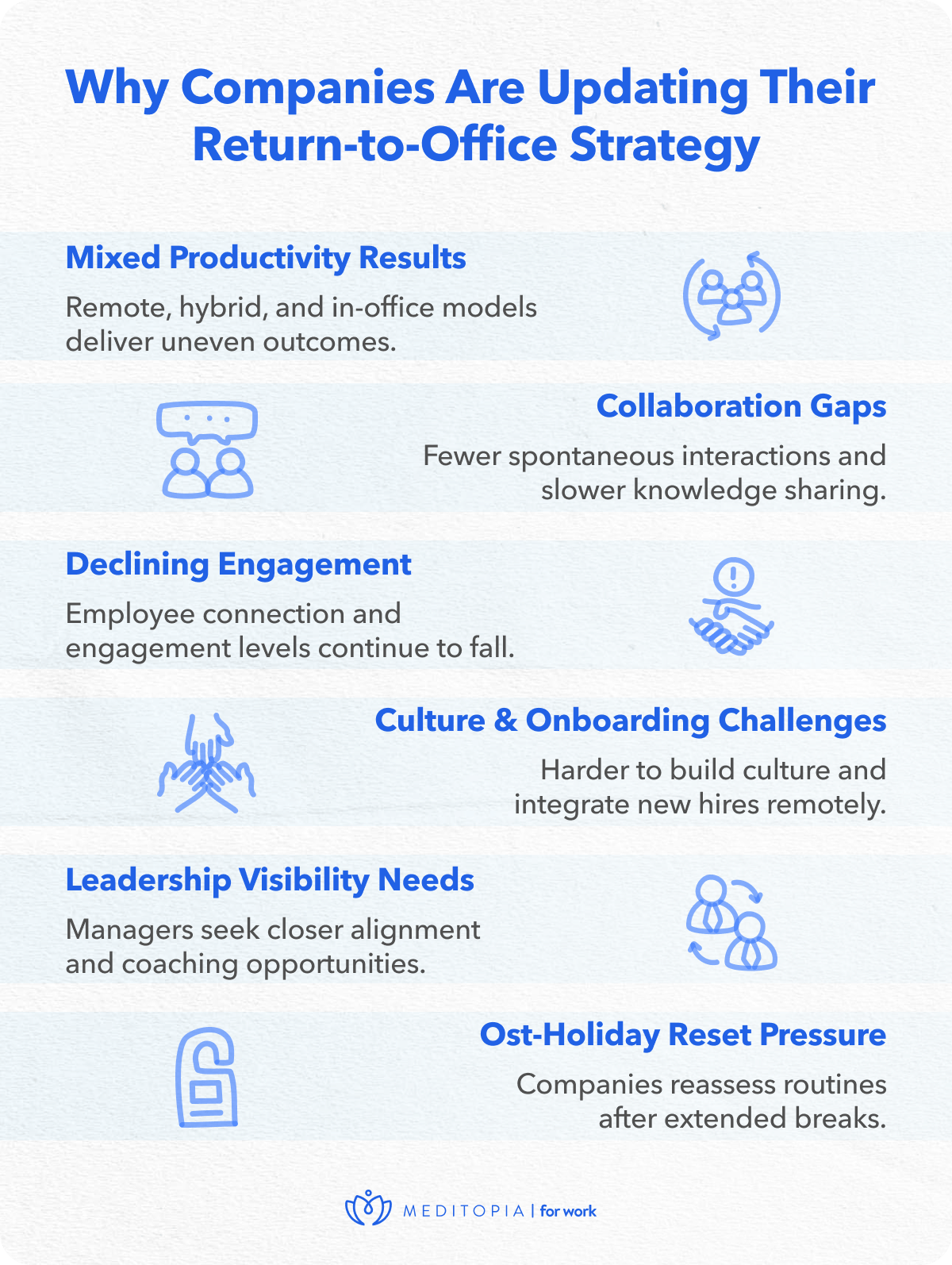
- Productivity concerns:
- Microsoft’s 2023–2024 Work Trends Index found that 87% of employees report being productive, but only 12% of leaders feel confident productivity is sustained in remote settings. Leaders cite reduced visibility and unclear metrics as concerns [1].
- Innovation + collaboration dips:
- MIT Sloan research shows that fully remote teams experience more siloing and fewer spontaneous interactions, which reduces cross-team collaboration essential for innovation [2].
- Engagement is declining globally:
- Gallup’s State of the Global Workplace reports a downturn in engagement after pandemic highs, accompanied by a rise in burnout risk and “low daily enjoyment” [3].
- Culture fragmentation:
- Edelman’s Trust at Work Special Report found that employees report weaker connection to organisational culture when the majority of interactions are digital-only [4].
- Talent retention pressures:
- A McKinsey study shows employees who feel disconnected from their team culture are 2.4x more likely to consider quitting [5].
In short: Companies are updating their return-to-office strategies to address collaboration gaps, rebuild culture, enhance performance consistency, and reduce disengagement.
Employee Concerns About Returning to the Office
Transitioning back to office is not just logistical, it is psychological. Data highlights a wide range of employee concerns:
- Commute burden:
- Loss of flexibility:
- Flexibility remains the #1 driver of job satisfaction globally.
- According to Gartner, employees with flexible work options show 55% higher performance [7].
- Childcare & caregiving challenges:
- A Pew Research Center report found that 52% of working parents struggle to coordinate childcare when RTO mandates are strict [8].
- Accessibility concerns:
- Employees with disabilities or chronic health conditions report increased transition stress, overstimulation, and difficulties navigating office environments. [9].
- Social anxiety + overstimulation:
- APA’s Workplace Report [10] highlights that returning to busy office environments can heighten employee anxiety, especially for neurodivergent employees.
- Fear of micromanagement:
- Harvard Business Review reported that many employees perceive RTO mandates as a “lack of trust,” which can impact psychological safety.
- Mental health strain:
Edelman Trust Barometer data shows employees view forced RTO as damaging for work–life balance, increasing transition fatigue during post-holiday periods.
Core Return-to-Office Models
Now you know why it's important to update your RTO strategies, but which strategies are the most suitable for your organization? Let's check some below.
Return-to-Work (RTW) Solutions & Best Practices
To reduce friction and protect wellbeing during workplace reintegration, HR teams can implement the following return-to-work strategies. They help reduce confusion and transition stress while reinforcing trust and transparency.
- Clear RTO communication playbook with timelines, expectations, FAQs
- Structured RTW program including reintegration guides and manager checklists
- Manager training on hybrid collaboration and psychological safety
- Transition period with flexible arrival/departure times
- Updated office layouts supporting in-office collaboration and focus work
- Digital meeting norms (camera norms, hybrid participation equity)
- Commuter support programs: stipends, parking passes, or transit cards
- Clear escalation channels for concerns or accessibility needs
- Change-management plan addressing resistance early
- Regularly updated health, safety, and ergonomic guidelines
How to Support Employees Returning to the Office
A compassionate, structured support system significantly improves RTO outcomes and reduces burnout risk.
- Start with individual 1:1 conversations to understand obstacles (caregiving, commuting challenges, mental health strain).
- Allow flexible hours during post-holiday transition periods.
- Communicate role expectations clearly to prevent fear of micromanagement.
- Provide mental health resources through EAPs, including support for anxiety and overstimulation.
- Offer ergonomic assessments and quiet zones for neurodivergent employees.
- Establish psychological safety norms: no “proving productivity,” transparency in evaluation, inclusive meeting practices.
- Provide recognition for the adjustment period, returning is a behavioural transition.
- Ensure managers have tools for manager coaching to navigate resistance with empathy and clarity.
Metrics HR Should Track in a Return-to-Office Strategy
HR teams should measure the success of their return-to-office initiatives through both qualitative and quantitative data. These metrics allow HR to refine policies continuously rather than rely on assumptions.
- Office attendance & badge-in data (weekly vs monthly trends)
- Productivity indicators aligned to team KPIs, not presence
- Employee sentiment surveys (transition fatigue, stress, psychological safety)
- Manager feedback on collaboration, deliverables, team cohesion
- Engagement metrics (Gallup Q12, wellbeing scores)
- In-office collaboration metrics such as meeting participation & cross-team projects
- Use of mental health resources and EAP sessions
- Attrition risk & exit interview insights post-RTO announcements
How EAPs & Wellbeing Programs Strengthen RTO Success
Evidence consistently shows that wellbeing programs increase RTO satisfaction and reduce transition stress. EAPs and wellbeing platforms like Meditopia for Work help with:
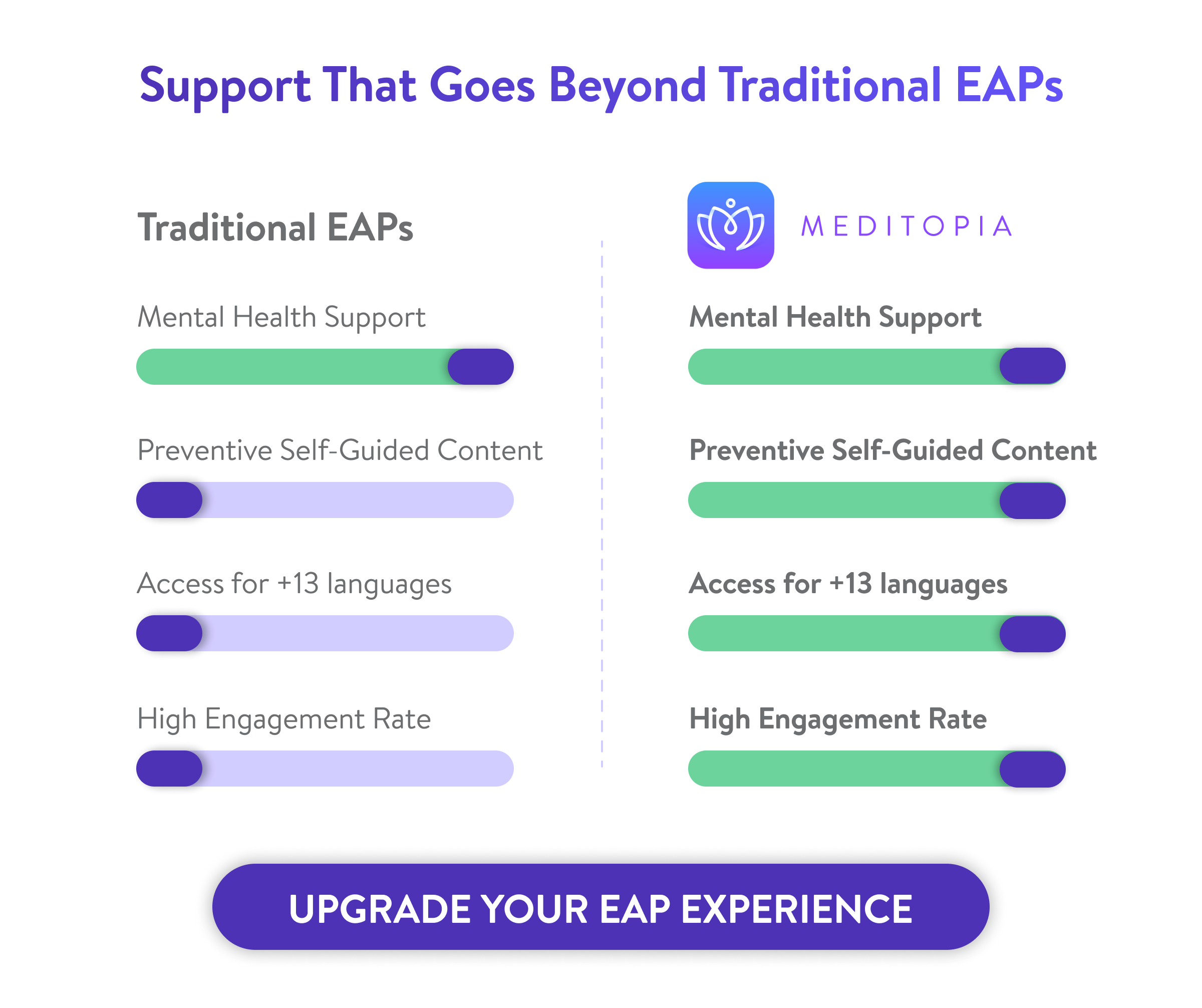
- Counselling sessions for anxiety, burnout, commuting stress, and adjustment fatigue
- Coaching for managers to navigate resistance and maintain psychological safety
- Financial wellness support for employees facing rising commute costs
- Mental health content (resilience, stress management, coping with change)
- AI-supported wellbeing assistants offering real-time help
- 24/7 support lines for crisis situations
- Preventive health content that helps sustain long-term wellbeing
As employees shift back to office routines, access to mental health resources becomes a core component of a sustainable RTO program.


.webp)